Pages

Showing posts with label Change management. Show all posts

Tuesday, October 15, 2013

Why ‟Keeping It Simple” Can Be a Complicated Mistake

strategy+business magazine:
Sally Helgesen
Sally Helgesen is an author, speaker, and leadership development consultant, whose most recent book is The Female Vision: Women’s Real Power at Work(with Julie Johnson; Berrett-Koehler, 2010).


Our people are dealing with complex problems. We’d like to bring you in so you can stimulate a thoughtful conversation, and hopefully stir up some big ideas that will take us forward.”
As a self-employed leadership consultant, I used to hear this kind of thing a lot, mostly before the 2008 financial crisis. ...
English: Dow Jones Industrial Average Jan 2006...
English: Dow Jones Industrial Average Jan 2006- Nov 2008 ‪中文(简体)‬: 道琼斯工业平均指数(2006年1月-2008年11月) (Photo credit: Wikipedia)
I rarely hear this kind of sentiment anymore, despite the fact that so many organizations are focused on the mantra of fostering change. In fact, during the initial planning stages of a retreat or conference, I’m often told just the opposite, with some version of the following message:
“One thing you need to know is that our folks are very busy. They don’t have the time or bandwidth to deal with a lot of big-picture concepts or ideas about the future. What they want are a few simple takeaways––three things they can do on Monday morning.”
Leaving aside the question of whether the leaders in question are really looking for three things to add to their already jammed Monday calendars, I find myself increasing skeptical of this approach. It seems to be based on a faulty understanding of what professionals operating in a complex and demanding environment actually require. Harried and rushed, distracted by technology overload, struggling with compliance issues that keep them mired in a welter of detail, and assailed by requests whose claims of urgency have become routine, the executives I meet these days often seem to be in need of refreshment and renewal rather than additional to-do’s.
Instead of three tips on how to manage invasive technologies, leaders need opportunities to articulate a broad vision of what they’re trying to achieve, so they can better distinguish which tasks require diligence and which can be let go. Instead of exhortations about the need to “manage up,” they need to understand how the erosion of barriers that defined industrial-era culture is leaving the employees they manage exposed to uncertainty and fear. Instead of quick fixes to address shifting markets, they need support to recognize how intersecting trends are creating whole new categories of unmet needs. ...
... By focusing potentially profound conversations on three action points or five bullets, those who plan seminars and retreats risk squandering the opportunity for thoughtful engagement and short-circuiting creative solutions that smart people, given the time and permission to think, are likely to come up with on their own.
Being able to shoot the rapids in an era of constant change requires robust thinking skills. People do not develop these skills by responding to prescriptive formulas, however neatly packaged as takeaways. Planting seeds that may germinate in the coming years is also a useful antidote to the sense of unrelenting urgency that pervades organizational life and that can undermine peoples’ ability to make good decisions.
Solution of the Nine Dots puzzle
Solution of the Nine Dots puzzle (Photo credit: Wikipedia)
Given companies’ oft-stated desire to help people “think outside the box,” I believe consultants and other service providers do a disservice when we go along with requests to deliver overly simplified solutions to problems that will just grow more complex. Instead, we should push those who engage us to think more profoundly about what thriving in a highly demanding global environment requires. Only by doing so can we support leaders in delivering programs that extend their employees’ capacity to respond to the complexities of today’s economic and technological frontier.

'via Blog this'
Enhanced by Zemanta

Friday, September 27, 2013

Why I Get My Best Ideas in the Shower

strategy+business magazine:

Theodore Kinni


I get a lot of good ideas in the shower, but I never thought too much about why until I read a new book by Ori Brafman and Judah Pollack, The Chaos Imperative: How Chance and Disruption Increase Innovation, Effectiveness, and Success (Crown Business, 2013). It turns out that it’s not the water pelting my noggin or the shampoo that promotes healthy, silky smooth hair triggering my creativity. It’s the default mode network in my brain.
Neuroscientists have long known that the human brain is always on, even when its owner isn’t consciously using it. (For other perspectives on this phenomenon published in s+b, see Matthew May’s piece from the Spring 2013 issue, and the Thought Leader interview with Loran Nordgren in the Autumn 2013 issue.) In fact, that’s exactly when the default mode network—a connected group of functional areas within the brain—is most active. As Brafman and Pollock explain it, “The default mode is always engaged, unless we actually interrupt it to perform a specific task.”
This neural network helps us evaluate our environment, reflect on it, and make connections between external information and the data we have stored in our heads. These connections are the fodder for all kinds of creative endeavors, including business innovation. ...
English: Albert Einstein Français : Portrait d...
English: Albert Einstein Français : Portrait d'Albert Einstein (Photo credit: Wikipedia)
Brafman and Pollack would say that my shower is “white space”—a time and a place in which I let my thoughts become less structured and more chaotic. In The Chaos Imperative, they point out how the white space in the lives of people like Albert Einstein and Steve Jobs produced some pretty good ideas, like the theory of relativity and all those digital fonts in your computer. The authors also describe how they have worked with the U.S. Army to produce fresh thinking by introducing a bit of white space into an environment in which being “on task” is a fetish.
So, if you’re pursuing innovation in your company (and what company isn’t?), what can you do get white space working in your innovation process? Brafman and Pollack offer these four tips in the book:
Image representing Steve Jobs as depicted in C...
Image via CrunchBase
Employ white space judiciously. It works best when you have a clear goal in mind and have already spent some time consciously working on a problem.
Consider how much white space is too much. Ask people if they feel like they need more or less unstructured time.
Move. As long as it doesn’t require a good deal of conscious thought, exercise is a proven way to trigger the default mode network.
Create a micro white space. Don’t look for answers as soon as you ask a question; give people 20 seconds or more to reflect. Likewise, start an idea session with a minute of silent reflection on the meeting’s purpose.


Theodore Kinni is senior editor for books at strategy+business.Ted Kinni 


'via Blog this'
Enhanced by Zemanta

Thursday, July 18, 2013

Elon Musk Thinks He Can Get You From NY to LA in 45 Minutes

Autopia | Wired.com:
Elon Musk
Elon Musk (Photo credit: jdlasica)
Elon Musk wants to revolutionize transportation. ... The serial entrepreneur envisions a future where mag-lev trains in enormous pneumatic tubes whisk us from Los Angeles to New York in 45 minutes. Need to be in Beijing tomorrow? No problem. It’s a two-hour ride away.
As crazy as it sounds, Musk is merely updating an idea that’s been around since the early 1900s, and
Image representing Tesla Motors as depicted in...
Image via CrunchBase
 at least one company is working on a functional prototype. But according to Wired sources, his involvement won’t be nearly as hands-on as Musk’s other endeavors at Tesla Motors and SpaceX.
The engineering behind the Hyperloop is similar to the old-school pneumatic tube systems used by banks to suck your deposit to the teller at the drive-through. But naturally, it’s more complicated than that.
A massive vacuum tube — mounted either above ground or even under water — would be combined with a magnetic levitation system used on conventional bullet trains. That means no friction, no wind resistance, no chance of collisions, and insanely high speeds.
Musk described the Hyperloop as “a cross between a Concorde, a railgun and an air hockey table,” at the AllThingsD D11 conference earlier this year. And in an interview with PandoDaily, Musk said the Hyperloop could form a fifth tent pole of modern transportation, joining cars, planes, trains, and boats, adding that because of its low energy usage and ability to get juice from solar power, it could generate more power than it would consume. But up until now, he hasn’t elaborated on his involvement.
Musk’s interest in the idea was sparked after researching California’s new high-speed rail project and realizing that it will be the slowest and — at $70 billion — the most expensive system on the planet. To his mind, there’s a better solution. The Hyperloop is it. And one firm unaffiliated with Musk is in the early stages of development.
ET3, a company based in Longmont, CO, is working on a Evacuated Tube Transport (ETT) system, which it describes as “space travel on Earth.” It uses two tubes — one for each direction — with 400-pound, passenger car-sized capsules that could house six people, each accelerated by linear electric motors. According to ET3, state trips would average speeds of around 370 mph, while international trips would hit that insane 4,000 mph mark. The company, which calls itself an “open consortium,” claims that it’s working with partners in China and has sold nearly 100 licenses for the technology. But ET3′s claims pose more questions than answers, particularly when considering you can buy your own license for the bargain basement price of $100.
But the idea for a vacuum-sealed high-speed transit system isn’t anything new. The “vactrain” conceptwas floated in the early 1910s and a paper written by physicist R.M. Salter and published by the Rand Corporation in 1972 titled the “Very High Speed Transit System,” or VHST, describes something very similar to what ET3 is developing.
But where Musk fits in remains a question. Sources close to the Tesla co-founder and CEO say he believes ET3 is on the right track, but is missing some key components, and that Musk has his hands full with Tesla and SpaceX, and would rather have some involvement in the development, with another entity taking the helm.
That lines up with a few responses Musk made on Twitter when asked about patenting the technology. “I really hate patents unless critical to company survival,” Musk Tweeted. “Will publish Hyperloop as open source.” When asked about partners, Musk said he’s “happy to work with the right partners. Must truly share philosophical goal of breakthrough tech done fast & w/o wasting money on BS.”
We’ll have to wait until August 12th to find out more.
'via Blog this'
Enhanced by Zemanta

Tuesday, June 11, 2013

Building a Flywheel Business

By linking customers and capabilities, companies can generate the momentum for sustainable growth.

strategy-business.com:
Many growth opportunities look like bottle rockets. They start with an impressive flash but end with an explosion. Most often, this is caused by business leaders’ tendency to chase after the biggest customer segments or the ones with the highest margins—typically the same segments that everyone else chases. Other leaders get lost in their enthusiasm for a new product or in their desire to pursue the next market fad. They fail to consider whether they are attempting to solve a customer problem, and how much the solution is worth. Such strategies may result in fireworks, but they don’t create a business of increasing momentum that provides both the stability and the energy reserve to drive sustainable growth—in other words, one with a solid flywheel.
Companies that pursue a flywheel-business model focus on building the kind of long-term capabilities that allow them to prevail against rivals and capture new opportunities for growth. ... Along the way, they target the customers or customer segments that will help them develop these capabilities. It is similar to the flywheel concept from high school physics, typically demonstrated by a heavy disc that is difficult to start up, but that spins easily with limited effort once it reaches full speed. Over time, a simple innovative idea becomes a well-oiled machine, which translates into a predictable and profitable business.
Two case studies—Johnson Controls Inc.’s Automotive Experience group and Pulte Homes—show how company leaders embraced the flywheel concept to unlock strategic growth opportunities.

Collaborate with Suppliers

Johnson Controls, Inc. logo
Johnson Controls, Inc. logo (Photo credit: Wikipedia)
Revenues at Johnson Controls Inc. (JCI) in 2012 were US$42 billion, nearly half of which came from the largest of its three global business units, the Automotive Experience group. But this group is relatively new. ...
The Automotive Experience group began in the early 1980s as the Automotive Seating group. At that time, the automotive industry was embracing outsourcing ... From 1982 to 1984, leading seat frame and foam manufacturer Hoover Universal Inc. had built six seat assembly facilities to serve nearby customer vehicle assembly plants. JCI recognized the outsourcing trend and acquired the Automotive Seating group from Hoover, along with the Ferro Manufacturing Corporation, a seat mechanisms manufacturer, and continued to add plants capable of providing full seat systems to the Detroit Three.
Realizing that wage arbitrage offered no competitive advantage ... JCI sought to build a sustainable flywheel business. ... John Daly, the newly appointed vice chairman of JCI, ... challenged his managers to embrace Japanese manufacturing methods and targeted the Toyota Motor Corporation as a customer that could help the company achieve its goal.
In October 1985, Daly informed his Georgetown, Ky., plant workers that a team from Toyota would be visiting in three weeks. Although the plant was viewed as JCI’s best in terms of internal housekeeping ... it followed U.S. manufacturing performance standards, which did not match Japan’s. Die changes took four to eight hours, so an average production run lasted 20 days to amortize the setup cost. Inventory levels exceeded a month of supply, and equipment ran only 40 percent of the time. Despite making nascent efforts at statistical process control, the company remained focused on volume, leading to substantial rework.
In anticipation of the Toyota visit, the Georgetown plant manager sought to temporarily cut inventory by nearly 70 percent, to a mere 10-day supply. ...  Later, he visited a seat supplier in Japan and learned that even 10 days was excessive by Toyota standards: The supplier held so little inventory that it did not even require forklifts to move materials around.
...[Shortly] after the JCI plant visit, Toyota announced that it would build an assembly plant in Georgetown. Over the coming year, Toyota visited JCI regularly, and the Georgetown plant attempted to showcase new improvements every time. ... By the time Toyota production began ramping up in 1988, the dedicated Toyota seat assembly area within the Georgetown plant operated with a mere 7.5 days of inventory, and by 1989 at full scale it held less than a day’s worth.
... Equally important, the lessons of Georgetown had spread across other JCI Automotive Seating group plants ... At this moment, JCI had completed the first turn of the flywheel; it had developed the capabilities to be a world-class seating manufacturer in the emerging “just-in-time” environment.
The company then sought to become a full partner in design through delivery. Chrysler appeared to be the logical customer to fuel this second rotation of the flywheel. ... In 1989, JCI jumped at the chance to take responsibility for the entire seat system in Chrysler’s new Neon model. The innovative compact car designed under Lee Iacocca’s guiding hand proved to be a huge commercial success for Chrysler—and for JCI, which now had the momentum to build its design capability.
JCI’s next step was to establish deeper relationships with the Detroit Three and other automotive manufacturers by creating dedicated “customer business teams.” These new cross-functional groups sought to expand their scope of responsibilities for their respective automotive customers. ... While the individual teams focused on serving the specific needs of their respective OEMs, a common R&D group sought to leverage the company’s growing expertise across vehicle programs by designing materials and components that could be incorporated into many different designs.
In 1994, JCI opened a new research and development center capable of doing its own prototype testing, expanding its design capabilities even further. Independent of the OEMs, the company also began examining car customer views regarding seating. Through sophisticated conjoint analysis, JCI developed deep consumer insight into preferences among features, such as motorized versus manual adjustments and seat heaters. Rather than simply accepting design guidance from the customer’s vehicle program manager, the customer business teams came armed with data to help them make the inevitable design trade-offs that influenced the entire car. The second revolution of the flywheel was complete.
The third rotation began with JCI’s acquisition of Prince Automotive (which made auto interiors) in 1996. Now the company could leverage its growing capabilities across a larger proportion of the vehicle. It provided instrument display clusters, dashboards, sound-cushioning headliners, and trim, in addition to the safety and comfort-critical seat system. Having gained control of all the key aesthetics of a car’s interior, JCI opened a new technology center in 1998 complete with an “idea factory” and “comfort lab.” ... JCI could now help a program manager make the right decisions throughout the car interior.
JCI continued to increase the momentum of its flywheel by expanding its product and geographic scope. In 1998, it added to its portfolio an automotive interior part producer, the Becker Group, with 70 percent of its revenues in Europe, and the Italy-based Commerfin SpA, a maker of door systems. Taking another page out of the Japanese playbook, in 1999 JCI launched a keiretsu-like partnership with Genetex, Jabil, and Microchip Technology to develop integrated electronics for car interiors. And in 2000, it expanded into Japan by acquiring Nissan’s stake in Japanese seat manufacturer Ikeda Bussan. By 2005, JCI had renamed the business unit the Automotive Experience group. It was now a global flywheel business with annual revenues of nearly $19 billion.

Create Scale in New Markets

In 1950, unable to afford an architect, a startup contractor named Bill Pulte used a plan from the Detroit Times’  Home of the Week section to build his first house—which he sold for $10,000. ... Over the next decade, his company, which is today called PulteGroup Inc. (of which Pulte Homes is a subsidiary), operated like every other builder in the country. It built individual, custom-designed homes for a particular price niche in a local market—in Pulte’s case, the high-end home market of the Detroit suburbs.
Pulte Homes logo
Pulte Homes logo (Photo credit: Wikipedia)
But Pulte recognized an opportunity to create a flywheel business of national scale by offering his high-quality craftsmanship at more affordable prices through modular design and prebuilt components. In 1959, Pulte shared his vision for the future in the plans for Concord Green in Bloomfield Township, Mich., the company’s first subdivision project. He priced the homes at $29,000—well more than double the $12,000 median price in Michigan at a time when median family income ran less than $6,000—and tapped the aspirational dreams of a growing upper middle class.
Pulte created a superior alternative to the then dominant models of suburbia. From experience, he understood that the custom model incurred additional costs for the buyer and uncertainty for the seller beyond the true value of the finished product. He also saw the flaws of the mass-produced subdivision model pioneered by Abraham Levitt and his sons, William and Alfred. Launched in 1947 to target soldiers returning from World War II, the Levitts’ original planned community in New York consisted of 2,000 rental homes employing a common, single-floor house plan. The homes could be built at the astonishing rate of 30 per day. By 1949, they had expanded the quality of the homes and introduced a new “ranch-style” design for sale at $7,990, well below the statewide median of $10,152. It was offered in five models defined by only slight differences in window placement and exterior colors. By 1951, what had become known as Levittown encompassed more than 17,000 homes—organized in huge subdivisions full of nearly identical “boxes.”
At Concord Green, Pulte sought to achieve the scale economies of the low-end, mass-production approach while providing the variety demanded by the more discerning upper-middle-income customer. His modular designs eliminated the need for expensive architects but, unlike the Levitts’ homes, provided generous variation in design throughout the subdivision. The company also built design tools to allow homebuyers to customize where it mattered most, in the interior. Customers could choose from a wide range of paint colors, flooring, countertops, and lighting and plumbing fixtures. The unique capabilities Pulte developed for the Concord Green project powered the first rotation of Pulte’s flywheel, enabling the company to reach an underserved market.
... Pulte expanded to other markets: Washington, DC, in 1960, Chicago in 1961, and Atlanta in 1968. In this second turn of the flywheel, he broke the paradigm of construction as a local business. Under the old model, relevant scale occurred at the local level, through builders’ ability to get better pricing and scheduling preferences with local subcontractors and suppliers. The new paradigm of modular designs and selective customization applied across markets, making national scale in home building meaningful.
Pulte’s national expansion enabled him to invest in improving his company’s capabilities in developing design tools and customer understanding—building more houses with more options while increasing scale by using national building material suppliers, not just local distributors. He continued to innovate during the 1970s, turning his focus to the baby boomer market. For example, Pulte’s in-house architectural team introduced the “quadromin-ium,” a single structure made up of four two-bedroom units with separate entrances and garages priced at a mere $20,000 per unit (only slightly above the median home price in 1970), targeting first-time buyers with kids. These new capabilities provided the momentum for the third rotation of the flywheel, as Pulte built additional national scale across a wider range of price points and markets.
Bill Pulte also recognized a potential disadvantage his business model had in comparison with that of entrenched local builders, who could ensure quality through personal relationships with subcontractors for electrical work, plumbing, and the like. To offset this disadvantage, in 1980 the company created “Pulte University” near its headquarters in Bloomfield Hills, Mich., and began training construction workers from around the country. Over time, the university was expanded to include high-performing managers as well. By the end of the 1980s, Pulte was selling homes in 17 markets in 11 states at prices ranging from $50,000 to $600,000.
Continuing to bear in mind the now middle-aged baby boomers, in the 1990s Pulte developed communities in Arizona, California, Florida, Michigan, New Jersey, and Virginia, targeting “active adults” age 55 and older. (A merger in 2001 with Del Webb Corporation, a builder of retirement communities, solidified this market.) ... Along the way,Businessweek named it one of the 50 top-performing companies and Moneymagazine declared it a 30-year “super stock.”
Today Pulte operates in more than 65 markets in 29 states and the District of Columbia, generating $4.8 billion in annual revenue—roughly a third of its peak revenues in 2005 before the housing crash. Despite being hit hard by the collapse of the bubble, Pulte survived, while other builders did not, by continuing to look for new markets and honing its design tools. In 2009, the company acquired Centex Corporation, a leader in the entry-level home market. And in 2011, Pulte drew on consumer research to introduce its trademarked “Life-Tested” designs, which offer innovative features to meet the needs of modern families. That same year, Pulte ranked as the country’s largest home builder (in terms of revenue), and one poised to grow during the housing market recovery.

The Perpetual Motion Machine

Both JCI and Pulte created sustainable, multibillion-dollar businesses that have proven resilient despite the misfortunes of the automotive and construction industries. They built their flywheels in different ways, but still provide common lessons for other companies.
First, both recognized the stagnation inherent in the status quo, and sought to create a step change in customer value by questioning conventional wisdom or practices. JCI sought to become more than a simple contract manufacturer leveraging nonunion wage rates, and Pulte sought to break the trade-off between customization and cost that constrained other homebuilders.
Second, both companies identified key capabilities that would enable them to compete successfully, and targeted a customer or customer segment that could help them further develop those capabilities. Importantly, they targeted neither the largest customer segment nor the customer that could pay the most per unit. Rather, they sought out an underserved market that would help them learn and refine their alternative business model. In some cases, they added capabilities and market access through M&A: Both companies realized that a well-functioning flywheel is not only an engine for organic growth, but can also provide the strategic logic for acquisitions.
Third, JCI and Pulte both had a “big-picture vision” for their company’s growth, and simultaneously understood the need to work with a customer to learn the myriad small details that no amount of planning or conceptual thinking could uncover. Toyota helped teach JCI how to implement lean manufacturing, and Concord Green provided the opportunity for Pulte to interact with hundreds of customers to build the design tools needed to change the customization–cost paradigm.
Finally, for both companies, the entire picture might not have been clear from the beginning. But each had a line of sight to the next flywheel revolution—that sense that this could be bigger than a single-customer initiative. They leveraged their growth to fund further investment ahead of the competition. JCI used its scale to invest in consumer research and expand its interior portfolio, whereas Pulte used its consumer knowledge to capture purchasing scale and enhance its design tools. Each nurtured specific competitive advantages to add momentum to its flywheel.
These four characteristics—step change in value, clear target segment, scale in new capabilities, and line of sight to the next revolution—are also found in other familiar flywheel businesses. Consider Walmart, which spent its early years targeting towns that then dominant Kmart had concluded were too small. The company recognized the possibility of a step change in value in towns where the existing alternatives were high-priced local stores with limited merchandise or a suburban mall a dozen miles away. By growing for more than a decade under the radar screen, Walmart achieved the scale to develop the IT systems and logistics network for which the company is now famous. Did Sam Walton foresee Walmart’s becoming the largest company in the world (by revenue)? Probably not, but he certainly did sense that his “everyday low price” model and the efficient supply chain behind it offered innovations to better serve millions of people in the type of middle American towns that he understood so well.
There is great power in linking customers and capabilities this way to create a flywheel effect. But it is important to remember that flywheels can be deceptive, leading to false confidence and hubris. ...
Flywheel business models do not achieve perpetual motion, but instead require continued tending to maintain the momentum. Times change, and flywheels are by definition hard to adapt and difficult to control—leaving a business vulnerable to the entry of a disruptive technology. In times like these, it can be tempting to revert to old habits, pursuing bottle rockets. Our advice: Don’t even try to course correct. Even companies with well-oiled machines should continually look for the next flywheel business, always seeking step-function changes by linking a new set of capabilities and customers. The original flywheel inevitably winds down, but companies that have planned ahead will have a new one up and running to take its place. 
Reprint No. 00180

AUTHOR PROFILES:

  • Tim Laseter is a professor of practice at the University of Virginia’s Darden School and other leading business schools. He is the author or coauthor of four books, including The Portable MBA (Wiley, 2010). Formerly a partner with Booz & Company, he has more than 25 years of business strategy experience.
  • Jeff Bennett is the founder and managing partner of Amphora Consulting. Formerly a partner with Booz & Company, he is an expert at helping companies think strategically about growth opportunities. He has facilitated discussions on strategy and organization at university executive education programs and at more than three dozen leading corporations.

'via Blog this'
Enhanced by Zemanta

Thursday, June 6, 2013

Disruptive technologies: Advances that will transform life, business, and the global economy

McKinsey & Company:

May 2013 | byJames Manyika, Michael Chui, Jacques Bughin, Richard Dobbs, Peter Bisson, and Alex Marrs

Download

... Not every emerging technology will alter the business or social landscape—but some truly do have the potential to disrupt the status quo, alter the way people live and work, and rearrange value pools. It is therefore critical that business and policy leaders understand which technologies will matter to them and prepare accordingly.

Podcast

Disruptive technologies

MGI's Michael Chui discusses the most economically disruptive technologies that will transform business and life in next decade.
Disruptive technologies: Advances that will transform life, business, and the global economy, a report from the McKinsey Global Institute, cuts through the noise and identifies 12 technologies that could drive truly massive economic transformations and disruptions in the coming years. The report also looks at exactly how these technologies could change our world, as well as their benefits and challenges, and offers guidelines to help leaders from businesses and other institutions respond.
We estimate that, together, applications of the 12 technologies discussed in the report could have a potential economic impact between $14 trillion and $33 trillion a year in 2025. This estimate is neither predictive nor comprehensive. It is based on an in-depth analysis of key potential applications and the value they could create in a number of ways, including the consumer surplus that arises from better products, lower prices, a cleaner environment, and better health.
Some technologies detailed in the report have been gestating for years and thus will be familiar. Others are more surprising. Examples of the 12 disruptive technologies include:
Really cool robots that you can piece together...
Really cool robots that you can piece together yourself. Emerging technologies pavilion at SIGGRAPH in Boston. August 2006. (Photo credit: Wikipedia)
Advanced robotics—that is, increasingly capable robots or robotic tools, with enhanced “senses,” dexterity, and intelligence—can take on tasks once thought too delicate or uneconomical to automate. These technologies can also generate significant societal benefits, including robotic surgical systems that make procedures less invasive, as well as robotic prosthetics and “exoskeletons” that restore functions of amputees and the elderly.

Slideshow


A gallery of disruptive technologies
Next-generation genomics marries the science used for imaging nucleotide base pairs (the units that make up DNA) with rapidly advancing computational and analytic capabilities. As our understanding of the genomic makeup of humans increases, so does the ability to manipulate genes and improve health diagnostics and treatments. Next-generation genomics will offer similar advances in our understanding of plants and animals, potentially creating opportunities to improve the performance of agriculture and to create high-value substances—for instance, ethanol and biodiesel—from ordinary organisms, such as E. coli bacteria.
Energy-storage devices or physical systems store energy for later use. These technologies, such as lithium-ion batteries and fuel cells, already power electric and hybrid vehicles, along with billions of portable consumer electronics. Over the coming decade, advancing energy-storage technology could make electric vehicles cost competitive, bring electricity to remote areas of developing countries, and improve the efficiency of the utility grid.
The potential benefits of the technologies discussed in the report are tremendous—but so are the challenges of preparing for their impact. If business and government leaders wait until these technologies are exerting their full influence on the economy, it will be too late to capture the benefits or react to the consequences. While the appropriate responses will vary by stakeholder and technology, we find that certain guiding principles can help businesses and governments as they plan for the effects of disruptive technologies.
  • Business leaders should keep their organizational strategies updated in the face of continually evolving technologies, ensure that their organizations continue to look ahead, and use technologies to improve internal performance. Disruptive technologies can change the game for businesses, creating entirely new products and services, as well as shifting pools of value between producers or from producers to consumers. Organizations will often need to use business-model innovations to capture some of that value. Leaders need to plan for a range of scenarios, abandoning assumptions about where competition and risk could come from, and not be afraid to look beyond long-established models. Organizations will also need to keep their employees’ skills up-to-date and balance the potential benefits of emerging technologies with the risks they sometimes pose.
  • Policy makers can use advanced technology to address their own operational challenges (for example, by deploying the Internet of Things to improve infrastructure management). The nature of work will continue to change, and that will require strong education and retraining programs. To address challenges that the new technologies themselves will bring, policy makers can use some of those very technologies—for example, by creating new educational and training systems with the mobile Internet, which can also help address an ever-increasing productivity imperative to deliver public services more efficiently and effectively. To develop a more nuanced and useful view of technology’s impact, governments may also want to consider new metrics that capture more than GDP effects. This approach can help policy makers balance the need to encourage growth with their responsibility to look out for the public welfare as new technologies reshape economies and lives.

About the authors

James Manyika and Richard Dobbs are directors of the McKinsey Global Institute, where Michael Chui is a principal; Jacques Bughin is a director in McKinsey’s Brussels office; Peter Bisson is a director in the Stamford office.
'via Blog this'
Enhanced by Zemanta

Tuesday, April 16, 2013

The Agility Factor

A few large companies in every industry show consistently superior profitability relative to their peers, and they all have one thing in common: a highly developed capacity to adapt their business to change.

strategy+business magazine:

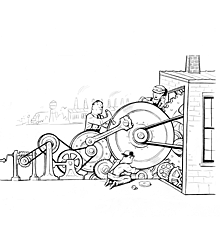
Everybody knows that big corporations, by nature, maneuver like battleships. Held back by their own inertia and current business strategies, they cannot turn quickly when the competitive environment changes. Everybody also knows that high performance, as measured by shareholder returns, is impossible to sustain over the long term; no company consistently beats the market.
But a recent in-depth study of long-term performance suggests an alternative point of view about business strategy. When the measure of performance is profitability, a few large companies in every industry consistently outperform their peers over extended periods. And they maintain this performance edge even in the face of significant business change in their competitive environments. The one factor they seem to have in common is agility. They adapt to business change more quickly and reliably than their competitors; they have found a way to turn as quickly as speedboats when necessary.
ExxonMobil is a good example. Throughout the 1980s, when it was still just Exxon, it was the largest, most profitable oil and gas company in the world. ...
T
Portrait of Lee Raymond
Portrait of Lee Raymond (Photo credit: Wikipedia)
hen in 1989, Exxon fell from grace. ... When Lee Raymond took over from Lawrence Rawl as chairman in April 1993, Exxon had dropped on Fortune’s list of most admired companies from number six to 110. As Raymond noted in a rare interview, a good day for him was one in which “Exxon” or his name did not appear in the papers.
Many companies would have reacted by putting in place short-term fixes and doing whatever they could to return to their old ways of operating. Instead, Exxon quietly moved to internalize the lessons of the Valdez spill and to build the capabilities required for future profitability. ... Recognizing that external upheavals could occur at any time, the company relentlessly drove for efficiency over the 1990s—a fortunate move because oil prices continued to fall throughout the decade. Exxon ... improved its exploration capability (where it had historically lagged behind its competitors), and pushed production efficiency even harder. Through all these measures, and by taking full advantage of the innate discipline for which it was known, Exxon halved its cost of finding oil and greatly improved its exploration success rate. In 1995, Lee Raymond was able to say, “Exxon is now much more efficient at getting on with it.”
Exxon’s focus on execution, technical excellence, and capital efficiency positioned the firm well to exploit the rise in oil prices that began in 1998. In 1999, Raymond, dubbed by Businessweek as the “anti-celebrity CEO,” engineered the largest acquisition in history to that point, and one of the most successful, with Exxon’s purchase of Mobil. In 2000, the combined company became the most profitable in history, a ranking it still holds today, and launched a new series of exploration initiatives to spur growth in oil and gas reserves.
The pattern of adaptation Exxon exhibited is not typical of most large companies. It represents an unusual ability to successfully respond to and learn from external events, to innovate technically and organizationally, and to plan and execute new courses of action. In short, Exxon demonstrated a rare and distinctive ability to continually and successfully adapt to changing circumstances. We call this “agility.” Today, when every industry faces turbulent change as a matter of course, a company’s agility becomes the difference between sustaining performance and falling behind.

Agility and Performance

A closer look at the record of Exxon and other large, public companies, from a variety of industries, supports this link between agility and consistent high performance. We studied the financial performance of 243 large firms in 17 industries over the 30-year period from 1979 to 2009.
Like others before us, we concluded that stock prices and shareholder returns cannot tell a story about sustained performance. ... Exxon and ExxonMobil stock languished through the 1990s, for instance, despite exemplary performance during the dot-com craze.
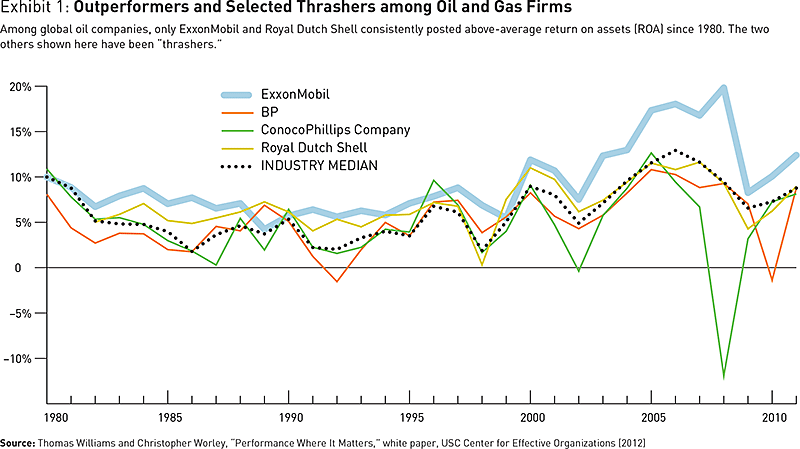
Thus, instead of relying on total shareholder return (TSR) or its even more misleading cousin, cumulative shareholder return, we looked at return on assets (ROA)—a meaningful proxy for profitability in many companies and a better indicator of management’s effectiveness. (Only one of the 17 industries we studied—financial services and insurance—lacked any kind of reasonable asset base. For this industry, we used return on equity as a more relevant proxy for profitability.) In every industry we studied, there were two or three “outperformers”: companies that achieved above-average industry ROA performance more than 80 percent of the time. Altogether, this group made up 16 percent of the sample. Exxon was a member; between 1979 and 2009, its ROA exceeded the industry average 97 percent of the time.
Among the other companies, we found two common performance patterns. About 18 percent of the sample were “underperformers,” whose profitability was below the industry average 80 percent or more of the time. The remaining 66 percent of the sample were “thrashers”; their profitability oscillated between underperformance and outperformance relative to the industry average.
Image representing IBM as depicted in CrunchBase
Image via CrunchBase
ExxonMobil is one of only two outperformers in the oil and gas industry. The other is Royal Dutch Shell PLC (see Exhibit 1). Outperformers in other industries include Campbell Soup, DaVita, GlaxoSmithKline, Honda, Johnson Controls, Limited Brands, Nike, Nokia, and Svenska Handelsbanken. Thrashers include BP, Procter & Gamble, IBM, Toyota, Pfizer, and Apple—all highly regarded companies that have received business accolades and spectacular press at times, but that tend to be admired for their peaks and forgiven for their valleys. Meanwhile, Exxon, Shell, and other outperformers, despite their occasional stumbles, more consistently deliver the goods.
To complete the link between agility and performance, we surveyed more than 4,700 directors and executives from 56 companies (including outperformers, underperformers, and thrashers), 34 of which were Fortune 500 firms included in the financial database. We asked about the way their organizations formulated strategy, designed their structures and processes, led their people, and changed and innovated. We also interviewed executives at 19 of the Fortune 500 firms.
When we compared our survey and interview data with the performance data, we observed a strong relationship between a company’s basic approach to management and its long-term profitability patterns. When markets and technologies changed rapidly and unpredictably—as they did in every industry over these 30 years—the outperformers had the capability to anticipate and respond to events, solve problems, and implement change better than thrashers. They successfully adapted. They were agile.

What Is Agility?

Agility is ... a cultivated capability that enables an organization to respond in a timely, effective, and sustainable way when changing circumstances require it. The management literature increasingly refers to this ability as a “dynamic capability”: the potential to sense opportunities and threats, solve problems, and change the firm’s resource base. This allows outperformers to maintain or enhance their relative advantages in ways their competitors fail to see or do not fully implement. Agility is also strategically relevant: Although agile organizations often change, they do not pursue change for change’s sake. They pursue it for the sake of competitive advantage.
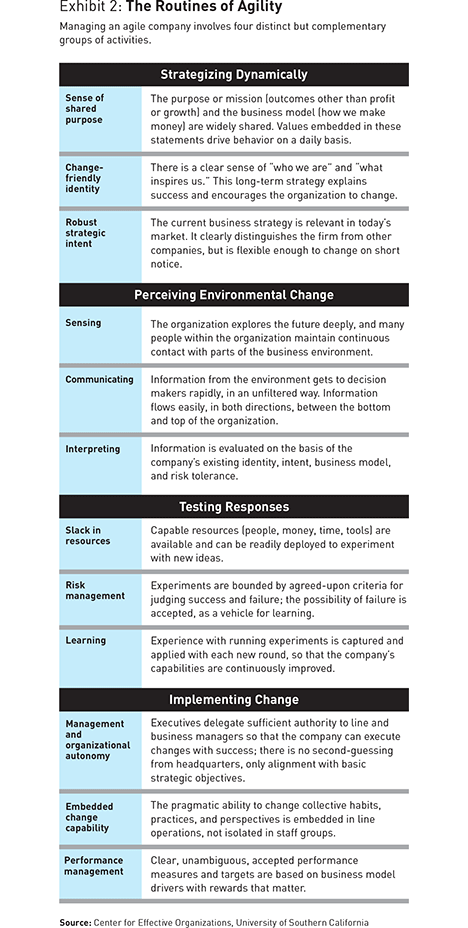
Four routines, summarized in Exhibit 2, below, distinguish the high-performing organizations from the thrashers and underperformers. These companies have the ability to strategize in dynamic ways; accurately perceive changes in their external environment; test possible responses; and implement changes in products, technology, operations, structures, systems, and capabilities as a whole. Importantly, it is the whole system of routines, not the possession of one or two of them, that confers agility. ...[The] hard work necessary to orchestrate them for consistent high performance is advanced and uncommon. By executing these routines in concert, over and over again, the outperformers consistently outpaced competitors.
Strategizing dynamically. ... [Agile] organizations don’t define strategy the way other firms do. For them, strategy has three explicit parts: a sense of shared purpose, a change-friendly identity that is nonetheless stable enough to ground the organization, and a robust strategic intent that clarifies how the firm differentiates itself.
The Capital One Financial Corporation, ... demonstrates all three elements of strategizing dynamically. It has a widely shared and well-understood sense of purpose that is codified in its mission statement and business model. ...
Capital One’s change-friendly identity is embodied in a phrase that its managers often use in conversation: “test and learn.” ...
The company’s ongoing business strategy—its strategic intent—also enables it to embrace continuous change. Capital One is known for its willingness to rapidly shift its operations (for example, the range of customer segments served, channels used, or products offered); to adjust the aggressiveness of its marketing, customer support, new product development, or R&D; and to modify the features it offers consumers. Capital One seeks its competitive advantage not through a single product line or approach, but through an ongoing series of temporary advantages that exploit current business conditions.
Perceiving environmental change. Agile companies take special care to accurately sense what is going on in the environment. Managers and employees are put into direct contact with customers, regulators, and other stakeholders through multiple touch points, structures, and practices, and they are expected to gather intelligence. They communicate their perceptions of the external world to company decision makers who have the support and knowledge they need to interpret those messages as important or unimportant, opportunity or threat. All three elements of perceiving environmental change are essential. Sensing without communicating is wasteful; communicating without interpreting is just noise.
DaVita HealthCare Partners Inc., a Fortune 500 kidney care organization with more than 1,840 dialysis centers, has an effective, institutionalized perceiving routine. To keep all employees focused on the external environment, DaVita abandoned the organization chart. ... DaVita’s management system orients each local dialysis center to the needs of patients, physicians, and the community. Meanwhile, central management concentrates on activities that deliver future value for the corporation—they charter teams to build leaders, research the implications of healthcare reform, identify M&A prospects, and develop new business. One of these teams identified and pursued a recent merger with HealthCare Partners. This process also identified international dialysis as a potential business opportunity.
This external focus is supported by a hard-and-fast rule that moves information up the hierarchy: “Whenever there is a director and three or more team members in a room, there’s a town hall meeting.” In these meetings, any question can be asked about any subject. If the director doesn’t have an answer, the question goes into his or her email and has to be answered within 48 hours.
All that information—from dialysis centers and initiative teams—gets funneled to top management for consideration. ... At DaVita, different top management teams are accountable for different purposes. That allows the company to assign people with the right expertise to various questions and issues, and improves their ability to interpret signals from their externally focused organization.
Thrashers and underperformers, with inward-looking and politicized management, find this level and intensity of communication congenitally difficult. They are too busy vying for turf, resources, and position to dispassionately consider the implications of outside signals. The external focus of agile companies enables them to face up to brutal facts and separate wheat from chaff.
Testing responses. Agile organizations refine their insights from the perceiving routine with a relatively high number of low-cost experiments. They encourage innovation and tolerate a good deal of failure. ... In most cases, there are explicit risk management processes—with valid success criteria so the plug can be pulled if the test fails—and continuous learning efforts so that the insights gained from the tests spread to all relevant parts of the company. Agile organizations invest significantly in learning and continuous improvement, never resting on their laurels or believing they have “cracked the code” once and for all.
The Limited Brands has both informal and formal testing routines that help the apparel retail chain keep pace with fashion trends and competition. Managers get in the habit of asking one another, “What’s new, what’s next?” This connects everyone in the organization, from senior managers to store merchants, to the observations and data they’ve gathered, ... and pushes them to consider what they are going to do about it. The “what’s new, what’s next” mantra keeps them on their toes. At the store level, small-scale testing procedures make it easy to try out new concepts, point-of-purchase displays, and product extensions. Consumer responses to small-scale tests are vetted by managers, and investment decisions follow successful ideas. Two of the Limited’s blockbuster retail brands—Victoria’s Secret and Bath and Body Works—got started this way. Their success as small experiments inside existing retail stores caught management’s attention and led to big commitments from CEO Les Wexner.
To enable these tests, agile organizations are not always and everywhere “lean and mean.” They must consciously build in extra organizational slack—investing in people, money, and time that don’t go directly to the bottom line, but allow the agile organization to rapidly deploy resources against opportunities that may or may not pay off, without jeopardizing day-to-day operations. The higher staffing levels also play an important role in capturing and disseminating learning that the organization can use later.
Implementing change. Agile companies have mastered the internal program management capabilities they need to convert successful tests and promising innovations into widespread practices. ... These companies have histories of successful transformations, restructurings, and merger integrations, and they also excel at the execution of new product rollouts, policy changes, and compliance mandates, as Exxon demonstrated after the Valdez spill.
The Swedish bank Svenska Handelsbanken is built on the principle of radical decentralization, and its record of financial success is unmatched; the recent financial crisis hardly dented performance. Guided by a change-friendly identity and the slogan “the branch is the bank,” branch managers are responsible for financial results and have the budget authority to take action. They control marketing decisions (except when a new product common to all branches is being launched), staffing levels, salaries, and property lease costs. In addition, on average, half of a branch’s staff has lending authority, permitting customers to receive answers very quickly. Branch managers are held accountable for results and continuous improvement by a “relative performance measurement system” that transparently compares all branches on a quarterly basis. At the end of the year, a performance-based profit-sharing system for all employees is triggered when the organization’s after-tax return on shareholders’ equity (excluding extraordinary items) is higher than the average for other Nordic banks. One-third of the excess amount is placed in an employee fund, and all employees, including the CEO, receive the same profit share.
Executives at Svenska’s headquarters are expected to support the decentralized approach through coaching, instead of through memos, instructions, and directives. If corporate managers disagree with a branch decision, they are expected to raise the issue through a short email or brief phone call, but the final decision ultimately remains with the local manager.
The implementation of change relies on managerial autonomy and shared leadership. ... Once a decision is made, managers charged with implementation are monitored, but not second-guessed. Strong-form performance management systems provide incentives for managers to follow through. Performance targets are objective and unambiguous; positive and negative consequences are real and transparent.
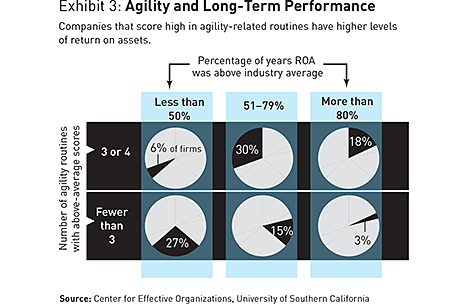
When we correlated the agility routine scores from the survey data with the firm performance results, a clear pattern emerged. Firms with high scores on three or four of the agility routines (strategizing, perceiving, testing, and implementing) are six times (18 percent vs. 3 percent) as likely to be outperformers in their industry. They are also twice as likely (30 percent vs. 15 percent) to have above-average ROAs between 51 and 79 percent of the time. Firms with only one or two of the agility routines, indicating an incomplete system, are much more likely to have below-average ROAs most of the time (see Exhibit 3). Although improving any one of these routines can make an organization more effective, agile companies, according to their own accounts, have at least three of these four traits in large supply.

Making Organizations More Agile

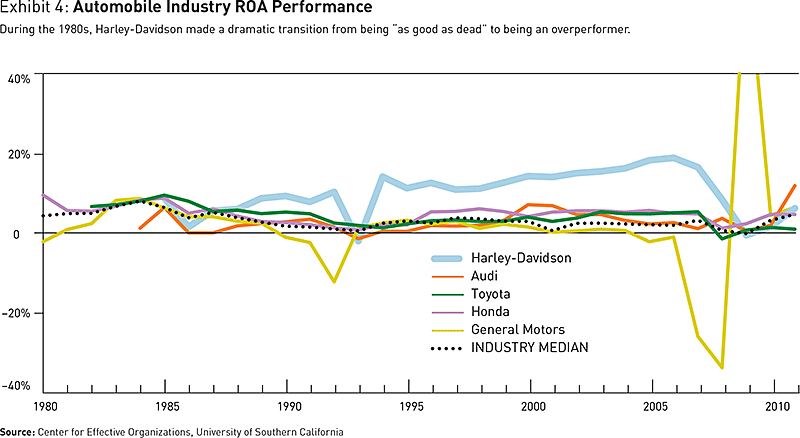
Developing the agile capability is no small feat, but it has been done. IBM, DaVita, and Harley-Davidson have all demonstrated that transformation is possible by committing to a systematic approach and following through. Even within this group, Harley-Davidson (H-D) stands out. It is one of a handful of companies in our sample that made the transition to agility. Its story demonstrates how organizations can build strategizing, perceiving, testing, and implementing routines.
H-D’s performance has been consistently higher than auto industry norms for more than 20 years (see Exhibit 4). Yet in 1980, the company was as good as dead. Its corporate parent at the time, American Machinery and Foundry (AMF), had put Harley-Davidson up for sale and found no takers. Japanese competitors like Honda had not only encroached on America’s last domestic motorcycle brand, but opened up entirely new segments of commuter and recreational users.
In 1981, Vaughn Beals and 12 other executives took Harley-Davidson private, buying it back from AMF. In a desperate bid for survival, they shrank the company by one-third, rapidly implemented Toyota production system techniques to improve product quality and reduce costs, and successfully petitioned the Reagan administration for the “Harley Tariff” on imported motorcycles over 700cc to give them some breathing room. In 1983, they formed the Harley Owners Group (HOG), a stroke of marketing genius that created the largest factory-sponsored club of its kind and enabled direct communications between H-D and its most fervent customers.
When Rich Teerlink took over as CEO in 1987, he inherited a company that had been rescued from the brink through a strong form of “command and control” management. Naturally, there were questions about whether Harley-Davidson could sustain its success without a crisis to compel its employees. But instead of clinging to a top-down management style, Teerlink and his senior management team engineered a further transformation of H-D using a model of shared leadership and accountability, continuous improvement, and investments in learning and development—practices that are all typically linked with agility. The company’s managers and employees were asked to go from a “tell me what you want me to do” style of managing others to a “given where we’re going, I’ll figure out what’s best to do” approach. Said Teerlink at the time, “I believe fundamentally that people should have the opportunity to influence their lives and their workplace.”
Teerlink and his management team took the company through a series of initiatives, including a “joint vision process” involving the top 130 executives. They clarified and codified Harley-Davidson’s identity, synchronized their planning and performance management to it, and set up an integrated, cascading goal-setting process that provided lines of sight from executives to the worker on the floor. Personal and organizational goals were incorporated into appraisals and variable compensation. Leadership and accountability were distributed throughout the organization. Along the way, Teerlink and other senior leaders paid close attention to the four routines of agility:
Strategizing dynamically. Prior to the buyout, H-D’s reputation and style had been rough, oily, and arrogant. Through strategy and organization changes that consistently emphasized the importance of customers, quality, and accountability, a new identity evolved, summarized in the company vision: “We fulfill dreams inspired by the many roads of the world by providing remarkable motorcycles and extraordinary customer experiences. We fuel the passion for freedom in our customers to express their own identity.”
Perceiving environmental change. At H-D, every employee engages with the outside world—particularly with customers. Through HOG, employees (including current CEO Keith Wandell) ride with customers, attend HOG rallies, and participate in sponsored musical and sporting events. The Harley-Davidson Museum in Milwaukee is a shrine that attracts 300,000 visitors each year. There is also constant formal and informal contact with H-D dealer and supplier networks, and an expanded website where customers can interact directly with marketing and product development. To help communicate the ideas that come in, H-D has a shallow hierarchy and little cultural tolerance for gatekeepers and apparatchiks who would impede or filter information flow to executives.
Testing responses. Managers routinely vet the ideas coming from HOG and dealer connections for viability. These ideas include marketing programs, model customizations, new motorcycle models, new engines, new styling, new manufacturing methods, new ways of working with customers, and new markets. H-D also adopted the quality movement practice of “plan–do–check–act,” wherein activities, processes, and decisions are improved on the basis of collected data, and the military practice of “after action reviews,” wherein participants in a campaign meet in intensive sessions to analyze successes and failures.
Implementing change. Harley-Davidson has repeatedly demonstrated its capacity for ongoing change. Since the leveraged buyout, it has implemented operational restructurings, a new product development process, new management processes and personnel practices, and expansion into Europe and Asia. In 2011, for example, the company embarked on an ambitious program to develop a full-blown mass customization capability. H-D reorganized and scaled down its manufacturing footprint, streamlined R&D, marketed a wide variety of customization options through dealers and the Web, and restructured the manufacturing process to a flexible system that can produce any custom version of any bike in any plant on any day. To accomplish this, the company engaged its unionized workforce to dramatically change work rules and move from 62 job classifications to five.
By the time Rich Teerlink retired in 1999, his team had transformed Harley-Davidson from an inward-looking, marginal, command-and-control organization to an agile, dynamic market leader permeated with shared leadership and accountability. Curiosity, experimentation, and direct action are explicitly encouraged and rewarded. But it is a controlled chaos, held together by the centripetal forces of a strong identity and shared values.

The Agility Challenge

Some business environments change faster and more profoundly than others, but it is a given that yours will change. The point of transformation is to adapt, and the point of pursuing agility is to become more adaptable. Executives in agile organizations make explicit, system-wide decisions that promote adaptability over stability and flexibility over inertia. Leaders and employees see the ability to change and adapt as the key to long-term success. They do not fear or avoid change; they embrace it because their ability to manage change well is their primary advantage.
Managing agile organizations means being willing to give up the activities that make you successful today but that won’t be appropriate tomorrow—over and over again. By contrast, thrashers often increase their commitment to successful courses of action but miss important inflection points in the market. BP, for instance, continued to emphasize cost performance over process safety and compliance for years, resulting in disasters like the 2005 Texas City refinery explosion that killed 15 and the 2010 Deepwater Horizon oil rig explosion and spill. Toyota was enamored with being the biggest auto company in the world and ignored important safety issues. Outperformers are not perfect, but they make fewer mistakes and, like Exxon, when they do stumble, they are quick to see the error and have the capabilities to correct it.
Perceiving the value of constant change is only the first step. Translating that perception into productive action requires know-how, processes, infrastructure, and resources. Leaders must commit the organization to a new course of action, mobilize resources, and implement changes. Niccolò Machiavelli’s insight is as relevant today as it was in the 15th century: “Whosoever desires constant success must change his conduct with the times.”

AUTHOR PROFILES:

  • Thomas Williams is a senior executive advisor with Booz & Company. Based in Ridgway, Colo., he specializes in strategy, organization, and management systems for energy and industrial companies.
  • Christopher G. Worley is a senior research scientist at the Center for Effective Organizations at the University of Southern California in Los Angeles. He is the coauthor, with Edward Lawler, ofManagement Reset: Organizing for Sustainable Effectiveness (Jossey-Bass, 2011).
  • Edward E. Lawler III is the director of the Center for Effective Organizations at USC; the coauthor, with Chris Worley, of Management Reset; and the author of Talent: Making People Your Competitive Advantage (Jossey-Bass, 2008).
  • Also contributing to this article was Niko Canner, former senior partner of Booz & Company; and s+bcontributing editor Jim O’Toole.


'via Blog this'
Enhanced by Zemanta