Pages

Showing posts with label Chief financial officer. Show all posts

Friday, August 10, 2012

How to Spend Too Much for Stuff You Don’t Need

Oh, you’re doing that already? And you’re wasting time managing accounts payable every day, tracking down approvals for purchases you don’t understand? Here’s how small companies can tackle purchasing inefficiencies.

CFO.com
David Rosenbaum

Image representing BLADE Network Technologies ...
Image via CrunchBase
… When [Mark Verbeck] started working at Blade Network Technologies as CFO in 2008, the company, … was a 50-person operation. Like many smaller businesses, it relied on tribal knowledge to manage its spending: everyone knew (or believed they knew) what everyone else was doing, and when anyone bought anything, everyone knew (or thought they knew) whether it made business sense.

…Because the company was small, it had little leverage with vendors and limited ability to negotiate for lower prices or early-payer discounts. Therefore, focusing attention on processes and spend — for supplies, services, and the like — didn’t seem worth the bother; it wouldn’t much affect the bottom line. So no one focused.

But by 2009, when Blade had tripled to about 150 full-time employees, its paper-based process — people throwing requisitions over Verbeck’s wall for approval — forced him to start asking questions and saying no more frequently. …

Image representing Coupa Software as depicted ...
Image via CrunchBase
The growing problem at Blade, Verbeck says, was not so much that money was being misspent as that the work was burning up his and the finance department’s time. Requests and invoices piled up on his desk, distracting him from more valuable tasks, while employees were either waiting to purchase the stuff they needed to do their jobs or buying and expensing it.Verbeck looked for a better way to do things, and in 2009 found the Coupa Software purchasing and expense-management platform. Last January he became Coupa’s CFO.

Sweating the Small Stuff
When times are good, when credit easy to come by and everyone is fat, no one sweats the small stuff. …[Today] the small stuff looms large, especially in small businesses trying to grow at a time when investors and customers are wary.

The savings that can be retrieved by automating and rationalizing approval and purchasing processes are palpable (a 2009 Aberdeen Group study estimated that “improving the percentage of all non-payroll, tax, tariff, and fee-related spend” — that is, indirect, nonstrategic expenses — brought under the management of a dedicated group can help enterprises “achieve a 5% to 20% cost savings for each dollar brought under spend management”). But the real value, says Kristen Lampert, corporate-services manager at specialty-investment bank Ziegler, is de-risking organizational spending by making sure the approval chain has the right people weighing in on the right things.

Workflow/Business Process Management (BPM) Ser...
Workflow/Business Process Management (BPM) Service Pattern (Photo credit: Wikipedia)
When Lampert took over the corporate-services department at Ziegler in 2010 — a team responsible for managing logistics, purchasing, and events — she couldn’t afford to waste time and effort on inefficient processes: the unit had been downsized to three full-time employees. In addition, Ziegler’s approval and bill-paying processes were all paper-based. … There was no visibility across the firm, she says. Expenditures were authorized by the wrong people, and the company didn’t have a risk-management component in place.
She describes an invoice for a software service “that should have had oversight by the IT director,” but instead was approved by multiple, siloed business units. The lack of communication lead to the bank paying for some services that were supposed to have been cancelled.

Lampert established a work group to design a request-for-proposal for a software service to rationalize the company’s processes. Her argument was that if the company could save 1% of the $16.5 million she managed annually, getting all spending in one bucket, the return on investment would be positive.

The group began by defining the organization’s must-haves: something easy to use …; the ability to manage contracts; an easy-to-configure approval chain; supplier network capability, and electronic links from Ziegler’s system to its suppliers’ e-commerce sites for electronic catalog purchasing (known as punch-out support). After researching 18 solutions, Ziegler chose [vendor], a software-as-a-service tool Lampert expects will be easy to integrate with the new general ledger the bank is in the process of picking.

English: Business Process Reengineering Cycle
English: Business Process Reengineering Cycle (Photo credit: Wikipedia)
Ziegler implemented [vendor] last March, and Lampert says the bank has already recognized $42,000 in second-quarter savings because managers now reach out to multiple vendors to get multiple bids on goods and services. Besides saving money, the managers get recognition for renegotiation successes that previously “were lost in a million e-mails.” And the visibility the platform provides, says Lampert, helps the company manage risk. For audit purposes, she says, “We can now track every contract, point to who approved what, and better understand our contractual obligations.”

Navigating the Vendor Landscape
According to a 2011 Gartner report, the e-procurement vendor landscape is “fragmented and rapidly evolving,” so finance executives need to perform due diligence when choosing a vendor and service that fits their organization’s budget and needs. Vendors in the space include Ariba, with its relatively large-company clientele and broad supplier network; Basware; and Coupa, which grew up in the small-to-midsize business space, and ranked highly in Gartner’s study for ease of use and customer satisfaction. And that’s only the A-B-C of the list of 42 vendors Gartner analyzes.

Coupa’s Verbeck asserts that the company’s cloud-native DNA enables it to evolve rapidly and allows users a great degree of freedom in creating “dynamic approval processes.” “That’s hard to do in a paper-based world,” he says.

With paper processes, a staffer is more likely to just circumvent the procurement system, as did one manager Verbeck spoke to who, when he discovered the purchase of a stapler was going to the CFO for approval, just bought the item off-contract and expensed it.

“Part of the miracle of the SaaS model,” says Verbeck, is that users can extend the functionality of the software — configuring it to their needs — without having to rework the software’s base code. In practical terms, that means users can alter the approval chain as needed without calling in the vendor to redesign (at great expense) the software.

But software doesn’t solve business problems: people solve business problems. “I could have put Coupa in place and not solved the problem,” says Verbeck, recalling his Blade days. The software would have just “paved the cow path” (automated a business process without addressing whether it was efficient). Instead, he began by blowing up Blade’s existing processes.

“Instead of requisitions going through the management hierarchy, we created approval chains based on who was buying, what they were buying, who they were buying it for, how much they were spending, and whether the item had been bought before. This process ended up with people approving things they had knowledge about. I explained to the managers that in this new world, they were accountable. If something landed on my desk that I had to reject, that was their problem.”

And Verbeck was no longer the bad guy.
Enhanced by Zemanta

Wednesday, July 18, 2012

You Can't Cut Your Way to Success

If your CIO isn't asking you for money, she's not being a good soldier; she's just not doing her job.

IT Value | July 17, 2012 | CFO.com
Susan Cramm

There are quite a few companies who have tried to cut their way to IT success over the past five years and are starting to regret it. 

… Companies that have delayed investments – in people and technology – are finding that they are now at a competitive disadvantage.  New competitors, without the burden of legacy IT environments …, are leveraging low-cost, fast-cycle disruptive technologies. These fast-moving competitors are pushing industry incumbents to build new IT-enabled capabilities or risk falling farther behind.
Is your company falling victim to this save now, pay later strategy?  Consider the following:
1)    Has your company reduced IT spending as a percent of revenue over the past 5 years?
2)    Does your company have the IT capability needed to exploit new technologies and reshape the company’s operating model, creating “smart” products and services, and enhancing its relationship with customers and suppliers?

If you answered “yes” to the first and “no” to the second, you need to engage with your CIO in a conversation about treating IT as an investment that builds rather than destroys IT capability and value.  … 

… IT should be managed as an investment, not as an expense.  …  In my research, business and IT executives estimate the expected return from their potential sustaining investments at 30%, and their innovative investments at 80%. 


Technology Map - Tutornet
Technology Map - Tutornet (Photo credit: steven w)
The real limiting factor is the organizational capacity to manage IT-enabled change and drive adoption, and thereby realize investment returns.  …   When asked about supply constraints, few technology and business executives mention money.  Rather, they complain that their companies are woefully short on the internal skills necessary to work with external suppliers (that is, the people with project management, business analysis, and solutions architecture skills) and are constrained by the complexity and hard-to-change nature of their current technological foundations (consisting of a myriad of technologies built over time to serve siloed operational needs rather than architectures built to support change and enterprise needs.)

…  A large portion of IT spending (on average 70%) is required to keep your existing technology up and operating safely.  Lights-on costs increase as your company grows, as new security risks are identified and new regulations imposed, as applications are implemented, and as the technological foundations become more complex.  The only way to save money on lights-on costs going forward is to invest money in order to reduce the total number of technologies you support while adopting new technologies that can do more for less (such as server virtualization and performance monitoring, among others).

CIOs that are doing their jobs … will do so (one hopes and should expect) in a responsible manner, in partnership with you and other executives to ensure that the company is:
1)    Realizing value from IT-enabled business investments;
2)    Driving down “lights-on” costs – and technology complexity – making it easier to introduce new changes, more quickly;
3)    Building the skills necessary to lead IT-enabled change and leverage external suppliers – in and out of IT.

…[Conventional] wisdom has long held that the competent CIO doesn’t negatively impact general and administrative expense margins and always delivers their share of any requested G&A cuts.  But this conventional wisdom needs to change.  IT isn’t an overhead expense; it’s an organizational asset that needs to be managed as an investment with a steady hand and an eye fixed on enhancing the company’s long term competitive capabilities and options.

Susan Cramm is an executive coach and president of Valuedance, an executive-coaching and leadership-development firm specializing in information technology. She is a former CIO and CFO, and is the author of The 8 Things We Hate About IT: How to Move Beyond the Frustrations to Form a New Partnership with IT (Harvard Press). Susan can be reached at http://www.valuedance.com/.
Enhanced by Zemanta

Monday, March 21, 2011

On the Inside, Looking Out

As CFOs gear up for growth, they are seeking targets that can help their companies innovate.
CFO Magazine
Sarah Johnson - CFO Magazine
March 1, 2011
After a long hiatus, companies are once again focusing on growth. But in an environment in which organic growth will be challenging and big deals may look too risky, many are taking an alternative path, exploring the acquisition of young businesses that can supply them with new talent, new technologies, and new products or services. Above all, today's dealmakers are looking to buy innovation.
Image representing National Venture Capital As...Image via CrunchBaseBecause so many companies responded to the recession at least in part by downsizing research-and-development budgets and addressing short-term needs like liquidity, they are now "basically buying their R&D by buying companies they think have real potential to grow over the long term," says Mark Heesen, president of the National Venture Capital Association (NVCA).
…"For us to expect that we'll think up all the great ideas and develop them internally is a stretch," says Bruce Knooihuizen, CFO at computer-services firm Rackspace, which has acquired four start-ups in the past four years.
The idea of purchasing a market-ready new product or service has a particularly strong appeal, because it allows a company "to accelerate an R&D or product-diversification process that otherwise would take years on an organic basis," says Mat Wood, a partner in BDO USA's transaction advisory practice….
An Eye on the Little Guy
…There are several factors in buyers' favor in the market for early-stage businesses. One is that many development-stage companies have had time to gestate while waiting for M&A activity to pick up and are now ready for prime time. "From an acquirer's perspective, you've got well-trained people, developed technology, defensible patent positions, and companies becoming increasingly profitable or near-profitable," says Trevor Chaplick, a partner at law firm Proskauer Rose.
The number of venture-backed companies acquired last year rebounded sharply from 2009.
Small companies with hot technologies are also more open to being purchased rather than holding out for an initial public offering, given the challenging market for IPOs and the high bar for success as a new public company.
… It's still a buyer's market, although the distressed-firm markdown bin is not as full as it was 18 to 24 months ago.
Despite those advantages, CFOs are nonetheless moving more methodically, even on smaller transactions. …"We don't see folks rushing to the market with a checkbook to do an irrational transaction," says Steve Joiner, managing partner for the southeast M&A group at Deloitte.
Smaller, but Not Easier
…Despite their bite-sized nature, smaller deals come with challenges of their own. Less-sophisticated companies may have little-to-no revenue, unclear business agendas, and disorganized finances. They may have failed to protect their intellectual property. And they may have made concessions on agreements that will lead vendors or customers to expect new terms following a change in control.
… "The two things these companies get acquired for are things that CFOs tend to not be focused on," says Matthew Bartus, a partner at law firm Dorsey & Whitney who represents emerging growth companies. "These acquisitions are not about revenue or earnings; they're about the people and technologies." As a result, the long-term worth of venture-backed companies can be hard to determine.
Such deals can also easily fall apart. …
Jason Child, Groupon's CFO, says the company considers many things when deciding whether it should buy sites in certain regions or build new ones from scratch. "It depends on a combination of factors," he says. "How long would it take [to do the acquisition]? How closely aligned are they with our approach and our style?"
Child says one of the main issues that arises when a big company targets a smaller one is the delicate business of approaching and winning over entrepreneurs who are used to working independently. "Entrepreneurs are excited about building stuff," he says. "They are not excited about larger companies' reputation for having more processes, more constraints, and more bottlenecks."
… "When you're buying a company that's run by an entrepreneur, that person may be used to calling the shots and won't want to collaborate," says Jim Cohen, executive vice president of mergers and acquisitions at Consolidated Graphics, a commercial-printing company that frequently buys family-owned businesses.
… Inexperienced buyers often underestimate the difficulties of integrating smaller teams into their infrastructure, notes Bartus. "You can manage liabilities with escrow, but you can't address a situation where you acquire a team that won't work in the [new] organization," he says.
To keep a newly acquired staff interested, buyers might consider adding retention bonuses to earnout targets. M&A experts also suggest that buyers ensure a degree of autonomy for valued legacy employees, and recognize that those employees may expect more from the deal than a payout, however large. … "The business objectives and the personal objectives of the ownership and key managers are often intertwined," says Will Frame, managing director of Deloitte Corporate Finance.
Grab a Partner
To get a handle on the true worth of a start-up and minimize the risk of a mismatch, many corporate buyers rely on the practice of establishing partnerships with potential targets. …
Will 2011 see early-stage deal-making continue at the same pace? With caution continuing to dominate CFOs' outlook, a sudden return to giant deals seems unlikely. Yet according to the latest Duke University/CFO Magazine Global Business Outlook Survey, fully a third of the CFOs who responded plan to spend cash on acquisitions in 2011 — twice as many as plan to use cash for research and development.
So, while a strengthening economy and growing confidence may usher in some larger transactions, for now, small deals — especially if they lead to innovation and growth — are indeed beautiful.
Sarah Johnson is senior editor for strategy at CFO.
Enhanced by Zemanta

Wednesday, November 17, 2010

Why C.E.O.'s Succeed (and Why They Fail): Hunters and Gatherers in the Corporate Life

What are the factors that determine which C. E. O.'s succeed and which fail? Even in the high-tech world, the laws of the jungle still rule.

strategy+business magazine
By Edward F. Tuck and Timothy Earle
{The authors of this article are an early-stage venture seed capitalist and an anthropologist who specializes in leadership.}

… Why do these otherwise successful, competent, well-trained people fail? Why, in the face of good advice, do they do things that bring their ruin? Why, after they fail, can people of less training, skill and intelligence turn their failures into successes?
…We have examined the most common ways that C.E.O.'s fail by applying the findings and techniques of anthropology to business organizations. We have found that the cause of these systematic failures is not the C.E.O.'s lack of skill, nor even his psychology; it is the changing institutional context in which he must perform.
C.E.O.'s fail most often in these three situations:
  • He or she has moved to a much smaller company, either as an entrepreneur or to take over a start-up or early-stage company;
  • The C.E.O.'s small company has grown to middle size;
  • The C.E.O. has been a successful vice president or chief operating officer and has been promoted to chief executive, or has been recruited as chief executive for another company.
… Something changes when a company reaches a certain size that makes it somehow different to manage; also, running an independent company is different from running a division of a large company. In short, small-company C.E.O.'s fail in large companies, large-company C.E.O.'s fail in small companies and C.E.O.'s who have risen through the ranks can't work with their boards.
Camp, Corporation and Community: The View from Anthropology
This is a diagram of societal development that...Image via WikipediaEvery company is a polity: a "politically organized community." …[Each] director, officer, manager and employee of a company is a functioning member of the polity.
… In a company, as in any polity, each person behaves according to his or her rules about behavior in groups. …[Half] of them, according to recent research,(1) are inherited. … When we try to succeed in a group, we unconsciously call on those primitive patterns of behavior …; and the structure of our groups comes from the way we behave together.
Anthropologists study people, their cultures and their polities. … When anthropologists find basic similarities across polities with no historical relationship, they believe that these similarities may come from behavior of biologically similar humans adjusting to the same organizational problems.
We have found patterns in these "primitive," isolated human polities that will help C.E.O.'s understand and solve difficulties in their relationships with their boards and their employees. …[Boards] are organizationally different from the corporations to which they are attached. We learned that the founder who is ruined by his company's success, the captain of industry who cannot run a small company and the seasoned executive who cannot be promoted are all victims of the same simple and ancient effect, and we propose a reason for that effect.
First, let's compare organizations.
There are three primitive organizations that have counterparts in modern companies: the working group, the camp and the hierarchy.
The Working Group
A graphical representation of the managerial g...Image via WikipediaA "working group" is found in all cultures.(2),(3) It is a temporary association of two to six people with useful skills, and it has a specific purpose: to hunt, to lay a section of railroad track, to right an overturned car, to catch a criminal. … They exist only for the purpose at hand, and they are organized quickly and informally.
When a hierarchical organization like a corporation or an army sets up a working group, a leader is named by the hierarchy ("chairman" or "squad leader"), although the real leader of the group emerges informally. … [Usually], the leader arises without any special action as the work progresses, and leadership passes from one person to another smoothly as the nature of the work changes. … When the problem is solved or abandoned, the group disbands.
The result of the group's work has a strong effect on the mood of its members. If the work is successful, they are elated and often celebrate. If the work is a failure, its members are depressed and uncommunicative for a time. Working parties are short-lived, have only a few members and are re-formed as needed.

The Camp
Hunting and gathering "camps" usually comprise about 30 people, from up to six families. The business of the camp -- hunting, gathering, cooking, building -- is done by temporary working groups as defined above. …[Today’s] hunter may be tomorrow's gatherer or hut-builder, although special skills such as stone tool making are recognized by all.
The hunting-gathering camp does not admit to having a leader; in fact, members of the camp will deny there is a leader. They will say, "We're all leaders." Nonetheless, a member of a nearby camp will say, "That's Joe's camp."
The camp thus does have a person who facilitates decisions. He or she does not command, but is respected because of knowledge, judgment and skill in organizing opinion. He or she does not give orders,(4) but focuses the decision-making process. Decision-making in a camp is a political, deliberative, consensual process. The camp's elders are expected to choose courses of action that are acceptable to the camp, and to accept suggestions from everyone. The whole camp behaves in a consensual manner and there is strong social pressure to conform. (In functioning camps, all members are interested in the facts, are fully informed of them, continuously discuss them and are aware of the various alternatives being considered.) …
Where a consensus is not found and distrust and disagreement linger, the usual solution is for the smaller faction to leave, striking off on its own. …The faction that takes off risks its very survival if a new camp receptive to it cannot be found.
When a camp grows to about 50 people, it becomes unstable and splits into two or more camps. This pattern of size-related instability is repeated in organizations of all kinds across human society.
The Hierarchy
The tribe, which may encompass several camp-sized groups, is a hierarchy. Hierarchical organizations have a clearly defined leader, and often many strata of authority. …The tribal hierarchy made it possible for more than 50 people to live and work together, at the cost of personal and group autonomy.
Simple tribes are organized into local groups of a few hundred, each with its own leadership. More complex tribes are organized into regional chiefdoms of several thousands, each with a hierarchy of leaders.
The State
In the archaic world, states eventually evolved to organize much larger populations, often living together in cities and relying on market exchange. It was at this time that real bureaucracies emerged, both to solve efficiently the problems of large groups and to control those groups for the will of dictatorial rulers.
With industrialization and cheap transportation, people began to live together in even larger groups. … At first, these were outright dictatorships, but improvements in communication, education and the economy led to a revision of societal values so that now all members of hierarchical societies have some voice. …
Size Determines Structure
…It appears that six or seven is the largest number of relationships that one person can deal with continuously. We need the hierarchy, with its well-defined roles and patterns of behavior, to allow large numbers of people to work together without overload.
An important study(5) has shown that decision-making performance in egalitarian groups falls off rapidly as the group size grows beyond six. This is a result of a well-studied limitation of the human brain, which cannot simultaneously retain and process more than about seven "information chunks" at once. (One such study by the Bell System set the size of local telephone numbers at seven digits.)
To make larger groups work while still retaining their egalitarian nature, six or seven groups form a "sequential hierarchy." …The largest stable group in which this process has been observed contains about 100 people, and involves three levels of consensus; the usual maximum is about 50 people (7 times 7), and uses two levels of consensus.(6)
Two points to hold in mind are: 1) As group size changes, so must its organizational structure. … 2) Within a single social system, groups of different scale exist and require different organizational structures. A major dysfunction occurs when an organizational structure appropriate for one scale is used for groups of other sizes.
The Camp in the Hierarchy
At the top of every stable hierarchy there is a camp-like consensual group. Even in outright dictatorships there must be an egalitarian council, as Machiavelli advised 500 years ago:
"A prudent prince must ... [choose] for his council wise men ... he must ask them about everything and hear their opinion, and afterwards deliberate by himself and in his own way, and in these councils and with each of these men comport himself so that every one may see that the more freely he speaks, the more he will be acceptable."(7)

The Modern Organization
Thus, four types of organization have arisen when people live together and try to do something in common: the working group, the camp, the general hierarchy and the state bureaucracy.
The most primitive of these is the working group, up to six people. It is also the one that elicits the most profound emotional response. The camp, up to 30 to 50 people, is the next most primitive, and is a very old structure. Camp-like groups are found among non-human primates, and in all human societies.
The most modern organizations, and therefore the ones for which we are by nature least adapted, are the hierarchy and the bureaucracy. Behavior in a tribe, a company or a nation is not innate: it is learned, in contrast to behavior in camps and working groups, much of which is innate. An individual's success in a hierarchy depends on how well he or she has learned its rules, and to what extent his or her innate behavior allows that person to conform to those rules. {emphasis added}
The Modern Corporation
A modern corporation employing more than 100 people is a hierarchy; a company of more than 1,000 is a bureaucracy. A camp-like board of directors is at the top, to offer guidance by diverse experience and to provide intercorporate information. The corporation's best work is done by working groups.
The advantages and satisfactions of recognizing the egalitarian…
How Boards Behave
Since boards are like camps, a successful C.E.O. must remember how camps behave.
A board is not a working party. It cannot solve problems, it can only approve or disapprove courses of action proposed by its leader. If it is forced to choose between alternatives, a crisis of leadership often arises.
The C.E.O.'s leadership role is not openly acknowledged by outside board members, who strongly assert their equality. The C.E.O. thus must reach consensus among board members before proposing important issues. This process is called "keeping in touch."
The C.E.O. is the natural leader of the board. … If the chief executive refuses to lead, then the C.E.O. and board will flounder or another individual member will assume leadership. In either case, the C.E.O. must be replaced. This is because the surrogate leader cannot lead well unless he or she assumes the C.E.O.'s role inside the organization as well as on the board.
Board members expect the C.E.O. to be their leader and will treat him or her as such until they decide to fire the person. … If an act or utterance of the C.E.O. is unreasonable in this leadership context, the other members will believe at a deep level that he or she is incompetent or insane. Since in either of these cases the C.E.O. must be replaced, an extremely unpleasant and difficult task, a member will sometimes opt for denial by assuming that a chief executive who exhibits such behavior is manipulative or evil, either of which is a disquieting but acceptable alternative.

The Ways C.E.O.'s Fail
We can now examine C.E.O. failure modes by comparing modern companies with polities in primitive cultures, and by recognizing that much of our behavior is genetically determined and will be similar when working within groups of the same size. Our understanding of the short-term development of companies can thus be aided by knowing the long-term evolution of human society.
These comparisons confirm anecdotal evidence that successful management techniques are fundamentally different for companies above and below a critical size, and that techniques which succeed in a company above the critical size will fail below it, and vice versa.
The comparisons also explain why C.E.O.'s who are successful as division or subsidiary managers in large companies are unable to run independent companies. These failures are related to their inability to deal with their camp-like boards of directors.
Consider the following scenarios:
Problems With the Board: The New C.E.O.'s Surprise
Those few extraordinary individuals who succeed by climbing to the top of a hierarchy are surprised and sometimes quickly fail when faced with the need to immediately lead the board. …
The result is that the C.E.O. often arrives at his position as head of the board without realizing that his role has fundamentally changed. He assumes that he simply has an organization like his old division or function to command.
If his whole experience has been in hierarchies, he may define himself as one who gives and receives orders… . If he has had no experience with boards of directors, he may make the fatal error of regarding his board as his new boss, as a working group to solve his company's problems or as a part of his organization that he must supervise. If he is told that he must lead the board but not command it, and that he must work by consensus, he finds this incomprehensible. …
If, in fact, the C.E.O. does not lead the board, the board's other members, … are confused and become unruly. The C.E.O. and sometimes the organization itself then fail. …
Problems With Becoming Big: The Faltering Founder
Unless he has access to an enormous amount of money, the founder of a company must first found a camp. In a camp, as we have seen, there is little specialization; in a new company, it is common to hear, "I wear a lot of hats." It is also common to operate by consensus: members marvel at the speed with which decisions are made, and at their feeling of mutual support, clear objectives and clean, unambiguous communication. Employees at all levels speak as though they know what is going on throughout the company. Most of the company's people work far more hours than a normal workday; they enjoy their work.
If the company succeeds, it grows….
The appropriate action is to assemble a hierarchy, using experienced people, when the company's staff numbers more than 20. … The C.E.O. must gradually abandon his role as consensus leader and take on the role of chief.(8)
This is a difficult transition even for C.E.O.'s who understand the problem. Often, a founder has chosen his role because of difficulties in a hierarchy; he sees the transformation of his company to a hierarchy as a personal failure. At best, he must deal with alienation and feelings of betrayal in people with whom he has worked closely, and with whom he shared the bonding and elation of a successful working party. Sometimes, even if his company succeeds, he is unhappy and unfulfilled.
Problems With Going Small: A Chief Without a Tribe
The opposite occurs when a C.E.O. is recruited from a large company to run a young one. Such people often have no experience with consensus-based groups.
…There is no hierarchical organization; it is a camp. He cannot delegate; he must work by consensus.
Conclusion
The literature and techniques of anthropology and cultural evolution can be used to understand business organizations at different scales. We have explained three familiar failure modes of chief executive officers, derived from studies of primitive societies and their leadership. We have shown that these failure modes can be avoided if the C.E.O. and the company's employees understand and conform to the deep structure of their organization.
We have also shown that the board of directors of a modern corporation is a more primitive and intrinsically different structure from the organization it serves, and that C.E.O.'s must use fundamentally different techniques to work with their boards and with their companies.
Many failures of companies and their C.E.O.'s can be avoided by supplementing graduate business training, … The goal is for the new C.E.O. to have the training to understand the differences between the organization he is entering and the one he is leaving.
In the absence of knowledge, people do the things that have worked for them in the past, and when they fail to work, simply do the same things more intensively, like a tourist in a foreign country who just shouts louder if he is not understood. …
Venture capitalists, executive recruiters and board members of young companies who have a stake in the success of the people they fund or recruit can reduce their risks considerably by discussing consensual organizations with their candidates. …
© 1989, 1990, 1996 Edward F. Tuck and Timothy Earle
(1) L.J. Eaves, H.J. Eysenck and N.G. Martin, "Genes, Culture and Personality: An Empirical Approach" (Academic Press, 1989).
(2) Allen W. Johnson and Timothy Earle, "The Evolution of Human Societies" (Stanford University Press, 1987). This work includes observations on the structure and leadership of primitive polities; insights from this book and the following monograph are used throughout the remainder of this article without specific reference.
(3) Timothy Earle, "Chiefdoms in Archaeological and Ethnohistorical Perspective," from the "Annual Review of Anthropology" (Annual Reviews Inc., 1987).
(4) Andrew Bard Schmookler, "The Parable of the Tribes" (University of California Press, 1984), p. 92. This work, subtitled "The Problem of Power in Social Evolution," contains many strong parallels to modern corporate behavior.
(5) Gregory A. Johnson, "Organizational Structure and Scalar Stress," from "Theory and Explanation in Archaeology," edited by C.A. Renfrew, M.J. Rowlend and D.A. Segraves (Academic Press, 1982), pp. 389-421.
(6) Gregory A. Johnson, op. cit. p. 402.
(7) Niccolò Machiavelli, "The Prince," translated by Luigi Ricci (The New American Library, 1952), p. 116.
(8) Eric Flamholtz, "How to Make the Transition From Entrepreneurship to a Professionally Managed Firm" (Jossey-Bass, 1986).
Illustrations by Bryan Wiggins
Reprint No. 96402
Enhanced by Zemanta

Wednesday, October 6, 2010

How centered leaders achieve extraordinary results

Executives can thrive at work and in life by adopting a leadership model that revolves around finding their strengths and connecting with others.

McKinsey Quarterly
OCTOBER 2010 • Joanna Barsh Josephine Mogelof and Caroline Webb


centered leaders article, organizational development, transformational change, life satisfaction, organizational transformation, Organization
…[The] global financial crisis and subsequent economic downturn have ratcheted up the pressure on leaders already grappling with a world in transformation. More than half of the CEOs we and our colleagues have spoken with in the past year have said that their organization must fundamentally rethink its business model.
Cover of Cover via AmazonOur work can help. We have conducted interviews with more than 140 leaders; … Through this research, we distilled a set of five capabilities that, in combination, generate high levels of professional performance and life satisfaction. We described this set of capabilities, which we call “centered leadership,” in the Quarterly in 2008 and subsequently in a book, How Remarkable Women Lead.1
Five capabilities are at the heart of centered leadership: finding meaning in work, converting emotions such as fear or stress into opportunity, leveraging connections and community, acting in the face of risk, and sustaining the energy that is the life force of change. A recent McKinsey global survey of executives shows that leaders who have mastered even one of these skills are twice as likely as those who have mastered none to feel that they can lead through change; masters of all five are more than four times as likely.2 Strikingly, leaders who have mastered all five capabilities are also more than 20 times as likely to say they are satisfied with their performance as leaders and their lives in general (for more on the research, see “The value of centered leadership: McKinsey Global Survey results”).
While such results help make the case for centered leadership, executives seeking to enhance their leadership performance and general satisfaction often find personal stories more tangible. Accordingly, as this article revisits the five dimensions of centered leadership—and their applicability to times of uncertainty, stress, and change—we share the experiences of four men and one woman, all current or former CEOs of major global corporations.

Meaning

We all recognize leaders who infuse their life and work with a sense of meaning. …[Meaning] has a significant impact on satisfaction with both work and life; indeed, its contribution to general life satisfaction is five times more powerful than that of any other dimension.
Whatever the source of meaning …, centered leaders often talk about how their purpose appeals to something greater than themselves and the importance of conveying their passion to others (for more on conveying meaning to others, see “Revealing your moment of truth”). Time and again, we heard that sharing meaning to inspire colleagues requires leaders to become great storytellers, touching hearts as well as minds. These skills are particularly applicable for executives leading through major transitions, since it takes strong personal motivation to triumph over the discomfort and fear that accompany change and that can drown out formal corporate messages, which in any event rarely fire the souls of employees and inspire greater achievement.
Avon LogoImage via WikipediaAvon Products CEO Andrea Jung described how meaning and storytelling came together when her company faltered after years of rapid growth. … Suddenly, it became harder for her to see where her momentum would come from. What’s more, she had to streamline her cherished community.
To remain true to her personal values, Andrea rejected the “more efficient” approach of delegating to managers the responsibility for communicating with employees about the restructuring and of sharing information only on a need-to-know basis. Instead, she traveled the world to offer her teams a vision for restoring growth and to share the difficult decisions that would be required to secure the company’s future. The result? Employees felt that Andrea treated them with honesty and humanity, making the harsh reality of job reductions easier to accept and giving them more time to prepare. They also experienced her love for the company firsthand and recognized that both she and Avon were doing all they could. By instilling greater resilience throughout the organization, Avon rebuilt its community and resumed growth within 18 months.

Positive framing

Positive psychologists have shown that some people tend to frame the world optimistically, others pessimistically.3 Optimists often have an edge: in our survey, three-quarters of the respondents who were particularly good at positive framing thought they had the right skills to lead change, while only 15 percent of those who weren’t thought so.
…When faced with too much stress (each of us has a different limit), the brain reacts with a modern version of the “fight, flight, or freeze” instinct . … This response equips us … not for coming up with creative solutions. Worse yet, in organizations such behavior feeds on itself, breeding fear and negativity that can spread and become the cultural norm.
When Steve Sadove took over Clairol, in 1991, for example, the company had been shell-shocked by a significant decline in sales volume. “I remember going to a very creative person, who did all the packaging and creative development,” Steve told us, “and saying, ‘Why don’t we do anything creative?’ He opened some drawers in his desk and started showing me all of this wonderful work that he’d done. Nobody was asking for it; people kept their head down in that culture. So part of my role as the leader was to create an environment that was going to allow innovation and creativity and make it OK to fail.”
Fortunately, we can all become aware of what triggers our fears and learn to work through them to reframe what is happening more constructively. Once we have mastered reframing, we can help others learn this skill, seeding the conditions that result in a safe environment where all employees are inspired to give their best.4
Steve found ways to stimulate creativity, such as exploring opposing points of view in discussions with colleagues. …[He] convinced others that speaking up wasn’t just tolerated but encouraged. He helped colleagues reframe the way they reacted to dissent, … Steve and his team introduced a winning hair care brand, Herbal Essences, and ushered in a golden period of growth for Clairol.

Connecting

With communications traveling at warp speed, simple hierarchical … are becoming less and less effective for leaders. For starters, leaders depend increasingly on their ability to manage complex webs of connections ... Further, leaders can find the volume of communication in such networks overwhelming. While this environment can be challenging, it also allows more people to contribute, generating not only wisdom and a wealth of ideas but also immeasurable commitment.
The upshot: CEOs have always needed to select exemplary leadership teams. Increasingly, they must also be adept at building relationships with people scattered across the ecosystem in which they do business and at bringing together the right people to offer meaningful input and support in solving problems.
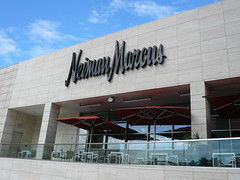
Nieman Marcus in Fashion Mall Las Vegas July 2009Image by mrkathika via FlickrMacy’s CEO Terry Lundgren learned firsthand about the power of connecting the internal community in 1988 when, 15 months after joining the retailer Neiman Marcus, he became its president and CEO. Shaking things up was core to his role:…Employees greeted him with widespread skepticism. “They were all thinking, ‘Who is this 37-year-old guy who is going to tell us how we should run our fantastic business?’” So Terry held a town hall meeting in the library across the street from company headquarters, in downtown Dallas. He invited anybody who wanted to come. The first time, he recalls, “I had only about 30 people show up! I thought it was going to be a little bit bigger than that, but I tried to be very direct and use the time mostly to listen and respond.” He kept holding meetings, noting that “it really moved the needle quickly in terms of getting things done in that company.” By the time Terry left, the twice-a-year meetings filled a 1,200-seat auditorium.
NEW YORK - OCTOBER 28:  (L-R) Macy's Inc. Chai...Image by Getty Images via @daylifeToday, as Terry leads Macy’s, he connects the dots internally and externally in many ways, from scheduling a monthly breakfast with new managers to forming relationships with peers who have led companies through change. Terry has also emphasized corporate connectivity, regrouping Macy’s stores into 69 districts, each tasked with creating “My Macy’s” for its customer base. …Terry’s top team believes its efforts to connect managers more closely to one another and to customers, through enhanced information sharing and product offerings tailored to local needs, help explain the company’s trajectory.

Engaging

Of survey respondents who indicated they were poor at engaging—with risk, with fear, and even with opportunity—only 13 percent thought they had the skills to lead change. …[Risk] aversion and fear run rampant during times of change. Leaders who are good at acknowledging and countering these emotions can help their people summon the courage to act and thus unleash tremendous potential.
But for many leaders, encouraging others to take risks is extremely difficult. …What’s more, to acknowledge the existence of risk, CEOs must admit they don’t, in fact, have all the answers—…
Dangerous Risk Adrenaline Suicide by Fear of F...Image by epSos.de via FlickrDoug Stern, CEO of United Media, has a number of ways to help his people evaluate risks and build their confidence about confronting the unknown. … Doug follows an explicit process anytime he’s facing a new, risky project (for example, selling some of his company’s assets). The process helps everyone—…prepare by devising risk mitigation strategies using these steps:
  • asking the team to imagine every bad scenario, even the most remotely possible—…
  • giving everyone a chance to describe those scenarios in detail and then to “peer into the darkness” together
  • devising a detailed plan for countering each nightmare—…
Once fears have surfaced and been dealt with, the team has a protocol in place for every worst possible scenario and a set of next steps to implement.5

Managing energy

Sustaining change requires the enthusiasm and commitment of large numbers of people across an organization for an extended period of time. All too often, though, a change effort starts with a big bang …only to see energy peter out. The opposite, when work escalates maniacally through a culture of “relentless enthusiasm,” is equally problematic.6 Either way, leaders will find it hard to sustain energy and commitment within the organization unless they systemically restore their own energy (physical, mental, emotional, and spiritual), as well as create the conditions and serve as role models for others to do the same. …
While stress is often related to work, sometimes simple bad luck is at play, as Jurek Gruhn, president of Novo Nordisk US, can attest. Nine years ago he was diagnosed with Type 1 diabetes. Working for a world leader in diabetes care, Jurek was no stranger to the illness … “My first reaction was, ‘You may have Type 1 diabetes, but you could also have a lot of other diseases that are much worse.’” So, he told us, “I went to the hospital for two or three days of testing and then went back home. We had our Christmas break. After that, I was back in the office. My wife, who is a physician, said to me, ‘That was a quick process!’ I basically took on my disease as a task.”
Run to change DiabetesImage by Siebuhr via FlickrJurek realized that one key to living a normal life with the disease is to embrace life, at work and at home. “A healthy lifestyle is important. I have five kids: … Sometimes they completely drain my energy, but they can energize me a lot. …I eat breakfast now every day, I exercise much more, and I started rock-climbing on a regular basis.” Everything improved—his physical condition, mental focus, emotional satisfaction, and spirit. He even learned to face what drained him most—unhealthy conflict at work—by addressing it directly and quickly, much as he handled his diabetes.
Even for leaders without such a challenge, Jurek sets another valuable example: “I saw this comedian who said that a man’s brain is filled with boxes, and one of them is empty. Well, when the day’s really tough in the office, I go into my empty box for 10 or 15 minutes and I do nothing. If I completely switch off for a short period of time, I get my energy back. Now, I’m not switching off every 15 minutes after working for 15 minutes… But I do not work weekends unless I really have to. And I’m not one who wakes up and the first thing is the BlackBerry. No way!”
Centered leadership is a journey, not a destination, and it starts with a highly personal decision. We’ll leave you with the words of one executive who recently chose to embark on this path: “Our senior team is always talking about changing the organization, changing the mind-sets and behavior of everyone. Now I see that transformation is not about that. It starts with me and my willingness and ability to transform myself. Only then will others transform.”


About the Authors

Joanna Barsh is a director in McKinsey’s New York office, Josephine Mogelof is a consultant in the Los Angeles office, and Caroline Webb is a principal in the London office.
The authors would like to thank Aaron De Smet and Johanne Lavoie for their extraordinary contributions to this work.

Notes

1 Joanna Barsh, Susie Cranston, and Geoffrey Lewis, How Remarkable Women Lead: The Breakthrough Model for Work and Life, New York: Crown Business Publishing, 2009.
2 The online survey was in the field from July 6 to 16, 2010. It garnered responses from 2,498 executives representing all regions, industries, functional specialties, and tenures. Respondents indicated their level of agreement with statements representing various dimensions of the leadership model. We then aggregated their answers into degrees of mastery of each dimension.
3 Martin E. P. Seligman, Authentic Happiness: Using the New Positive Psychology to Realize Your Potential for Lasting Fulfillment, New York, NY: Free Press, 2004.
4 Michael A. Cohn et al., “Happiness unpacked: Positive emotions increase life satisfaction by building resilience,” American Psychological Association, Emotion, 2009, Volume 9, Number 3, pp. 361–68.
5 Psychologist Gary Klein has developed and applied in a variety of settings a similar approach that he calls the “premortem.” For more on this technique, and on the broader problem of executive overconfidence, see “Strategic decisions: When can you trust your gut?” mckinseyquarterly.com, March 2010.
6 Edy Greenblatt, Restore Yourself: The Antidote for Professional Exhaustion, Los Angeles, CA: Execu-Care Press, 2009.
Enhanced by Zemanta

Wednesday, August 25, 2010

Professional Contacts Key to Finance Officer Visibility


August 24, 2010 (PLANSPONSOR.com) – Accounting and finance managers have the best shot at keeping up their visibility by staying active in professional groups, but they shouldn’t forget about using social media outlets as well.

Image representing Twitter as depicted in Crun...Image via CrunchBaseImage representing LinkedIn as depicted in Cru...
Image via CrunchBase
A Robert Half Management Resources news release about its latest poll said 28% of chief financial officers recommended keeping up professional group contacts, while 22% said Web sites such as Twitter and Linkedin were also useful in this regard.
According to the news release, visibility enhancing moves recommended by poll respondents also include:
  • Publish articles in trade/business journals, 15%
  • Volunteer or participate in charitable work, 15%
  • Speak at industry events or webinars, 15%
"An extensive base of business contacts is one of the most valuable assets a professional can possess," said Paul McDonald, executive director of Robert Half Management Resources, in the news release. "The most successful executives constantly cultivate a network of people -- through both in-person and online networking -- who will help build their reputation in the industry. As social networking continues to gain popularity, it's especially important to use online tools to build credibility and visibility in the business community."
The survey was conducted by an independent research firm and includes responses from 1,400 CFOs from a stratified random sample of U.S. companies with 20 or more employees.
Fred Schneyer
editors@plansponsor.com
Enhanced by Zemanta