Pages

Wednesday, January 2, 2013

13 money tips for 2013

CBS News
By Jill Schlesinger
December 31, 2012, 7:00 AM

(MoneyWatch) Next year is going to be a long one if you suffer from triskaidekaphobia, fear of the number 13. To lessen the anxiety, consider these 13 money tips for 2013.

1. Track your expenses. …[Without] understanding where your money goes, it's nearly impossible to make different choices about how to spend. The good news is that there are plenty of software programs to help you out, or you can use a plain old spreadsheet.

2. Establish adequate emergency reserve funds. Perhaps the single best way to protect yourself from unforeseen circumstances is to hold 6 to 12 months of living expenses in cash or cash equivalent accounts. For those in retirement, consider carrying 12 to 24 months of expenses. Don't forget to replenish cash reserves for any bills that are coming up over the next year.

3. Earn more on your safe money. … Go to www.depositaccounts.com, where you can find longer-term CDs with low penalties; shop around at credit unions that offer better interest than most banks; and consider "I-bonds," a kind of savings bond issued by the U.S. government, from treasurydirect.gov.

4. Get a handle on your risk tolerance. Before you make big changes to your investment accounts, take a risk assessment questionnaire, like this one from Vanguard. The results should help you re-balance your portfolio in a manner that is consistent with your needs and takes into account your emotions.

5. Determine whether you should manage your money or hire someone to do it. Do you have the time, energy, acumen and temperament necessary to successfully manage all of the components of your financial life? If not, it could be time to interview a financial professional. The National Association of Personal Financial Advisors is a good place to start the process.

6. Stop trying to beat the market. Charles D. Ellis, a consultant to large institutional investors, … conducted research that found that only one in five mutual fund managers beats the index over the long run. With those odds, investors would be wise to replace actively individual stocks and managed mutual funds with index or exchange-traded funds.

7. Calculate your retirement number. Many people say they are worried about retirement, but most of them haven't done any planning to help themselves. … The Employee Benefit Research Institute's "Choose to Save Ballpark E$timate" tool is easy to use, or check out your retirement plan/401(k) website for more retirement tools.

Logo of the United States Thrift Savings Plan.
Logo of the United States Thrift Savings Plan. (Photo credit: Wikipedia)
8. Maximize retirement contributions. The federal government is helping on this front by increasing the 2013 limit for employees who participate in 401(k), 403(b), most 457 plans and the government's Thrift Savings Plan to $17,500 from $17,000. The catch-up contribution limit for employees aged 50 and over remains unchanged, at $5,500. The limit on annual contributions to traditional and Roth IRAs will rise by $500 to $5,500.

9. Consider buying a home. The real estate market is recovering, which means that those who have been sitting on the sidelines may want to take the plunge on a new home. Still, make sure you weigh whether you are better off renting or buying with this NY Times calculator.

10. Refinance your mortgage. Mortgage rates are at historically low rates and appraisals are starting to rise, so even if you haven't been able to refinance in the past couple of years, try again. Use this re-fi calculator to determine how much you may be able to save or how many years you could potentially shave off the term of your mortgage.

11. Assess your property insurance, … The best time to review your policy is before an event occurs, not after. The three biggest mistakes people make with homeowners insurance are: 1) under-insuring; 2) shopping by price only and not comparing apples to apples; and 3) not reading policy details before a loss occurs.

12. Review life, disability and long-term care insurance coverage. This is the part of your financial life where an error can cause huge damage to your family. For life insurance, make sure you have enough with this online calculator. Nine times out of 10, term life insurance is the best bet. For disability insurance, enroll in your company's plan, if offered. If you are self-employed, shop around and buy at least some coverage. If you're over 50, time to shop around for long-term care insurance.

13. Create/review/update estate documents: Hire a lawyer to prepare a will, power of attorney and health care proxy/living will documents. … As part of the process, create a go-to list of documents, which can include key information about investment accounts, insurance policies, auto titles, income tax returns. Estate records and final instructions also should be stored in a safe place -- don't forget to provide copies to your executor or trustee.

Jill Schlesinger On Twitter »
  • View all articles by Jill Schlesinger on CBS MoneyWatch »
    Jill Schlesinger, CFP®, is the Editor-at-Large for CBS MoneyWatch. She covers the economy, markets, investing or anything else with a dollar sign. Prior to the launch of MoneyWatch in 2009, Jill was the chief investment officer for an independent investment advisory firm. In her infancy, she was an options trader on the Commodities Exchange of New York.
© 2012 CBS Interactive Inc.. All Rights Reserved.
Enhanced by Zemanta

Wednesday, December 26, 2012

What the "broken window" fallacy means for you

Broken Window Fallacy
Broken Window Fallacy (Photo credit: KAZVorpal)
CBS News
By Robert Pagliarini /
MoneyWatch/ December 13, 2012, 6:55 AM

Commentary:
"Freakonomics", "Consider the Lobster", "Gary Benchley, Rock Star" and "Everything Bad is Good for You" (Photo credit: mudge)
(MoneyWatch) Have you heard the parable of the broken window? It's a wonderful example of unintended consequences that applies not only to businesses activity and government regulations, but to individuals as well. Fans of the book "Freakonomics" are given a front row seat to watch the dramatic and always surprising (they are "unintended" after all) effects of unintended consequences. …

The broken window fallacy, as it is often called, was introduced by French economist Frederic Bastiat in 1850 in his essay, "That Which is Seen and That Which is Unseen." The parable is about a shopkeeper's boy who accidentally breaks a window at his father's store. A bystander commiserates with the shopkeeper, but explains that the broken window is actually a blessing because now the window replacement company gets to earn money replacing the pane.

As a result, the window repair man will make some money, and he may celebrate by stopping off at the local cafe and ordering a round of espressos for his crew for their good work fixing the shopkeeper's window. In other words, a solitary broken window has created a windfall for the community. People are working, money is exchanging hands and everyone benefits from the boy's carelessness.

This, as Bastiat alludes in his essay title, is what is "seen." It's also the point where most of us stop in our analysis. …

But what is not seen in this little town with the broken window? … What if the shopkeeper had planned on buying a new pair of shoes for his wife, but now because of the expense of fixing the broken window, he can't afford to? Who loses here? Well, the wife for one, but also the shoemaker. The money that would have been gone to the shoemaker now is being spent somewhere else. … The broken window helps the window repairman -- this is quite visible -- but the struggling shoemaker doesn't know what he lost.

Of course, nobody would be dumb enough to celebrate a broken window, would they? Sadly, yes. In wake of Hurricane Sandy (and every other natural disaster or calamity), experts sound off on TV and in newspapers about how the storm will be good for the economy. "Think about all the reconstruction and jobs this will create!" they gleefully chirp.

… And what's even more surprising is that even well respected Nobel Prize-winning economists get this wrong. In a New York Time's column written just a few days after the Sept. 11, 2001, terrorist attacks, Nobel laureate Paul Krugman wrote that "the terror attack could even do some economic good." It's deja vu all over again.

So what does the broken window fallacy have to do with you? … I'm guessing that there is a great deal of evolutionary value in paying full attention to what's immediately in front of us … and less benefit from contemplating what is not as obvious. But regardless of why we become blinded to the future, it can have devastating consequences in our lives.

Unintended consequences show up in all areas of our lives and especially when it comes to laws and politics. Says Yaron Brook, co-author of "Free Market Revolution: How Ayn Rand's Ideas Can End Big Government," "Policymakers seldom foresee the destructive consequences of their interventionist government policies because they seldom understand how markets work. If you're going to pass laws that affect the economy, you have a moral obligation to know economics."

… What decisions and behaviors do you engage in that are producing unintended consequences? Consider the ramifications of your actions that are unseen today, or maybe even a week, month or year from now, and that will ultimately affect your happiness, health and relationships.

Watch John Stossel debunk the broken window fallacy.

© 2012 CBS Interactive Inc.. All Rights Reserved.

Robert Pagliarini On Twitter »
View all articles by Robert Pagliarini on CBS MoneyWatch »

Robert Pagliarini is obsessed with inspiring others to create and empowering them to live life to the fullest by radically changing the way they invest their time and energy. He is the founder of Richer Life, a community of passionate people who want to learn and achieve more in life and at work. He is a Certified Financial Planner and the president of Pacifica Wealth Advisors, a boutique wealth management firm serving sudden wealth recipients and affluent individuals. He has appeared as a financial expert on 20/20, Good Morning America, Dr. Phil, Dr. Drew's Lifechangers and many others.
Enhanced by Zemanta

Thursday, December 6, 2012

Do Less, Achieve More: The Beauty Of Effective Delegation

Fast Company:
Fast Company (magazine)
Fast Company (magazine) (Photo credit: Wikipedia)
BY DAVE LAVINSKY | DECEMBER 3, 2012

Are you swamped at work? Here's how to delegate effectively and increase your productivity.


[Image: Flickr user Henti Smith]
As company owner, you need to focus only on the items that add the most value to your organization. In general, these are the things that you, and only you, are capable of doing. You should delegate the rest.

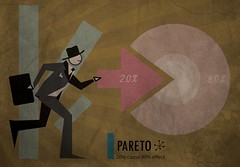
Pareto principle
Pareto principle (Photo credit: BEUTELTIERE)
Of course, you need a way to determine what the key things are on which you should be spending your time. Consider the Pareto Principle, or the 80/20 rule, ... In the case of your focus, the Pareto Principle says that 20 percent of your efforts yield 80 percent of the results you achieve. Therefore, the key is to identify what this 20 percent of your work is and do more of it (and delegate the 80 percent).
Identifying Your Top 20 Percent
Pareto Principle Option 2
Pareto Principle Option 2 (Photo credit: Sleepy Valley)
The first way to determine which 20 percent of work you do yields 80 percent of the results is to think back. What were the most important projects you completed last year that propelled your company forward? Your answers will include the types of projects that belong in your top 20 percent and which you should continue to do.
The second way to determine your top tasks to perform is to review your to-do list and consider the following questions when reviewing each item:
  • Does that activity really add value to your company?
  • Are you really great at performing that task?
  • Is there somebody else who can do better, as well as, or nearly as well as you at completing the task?
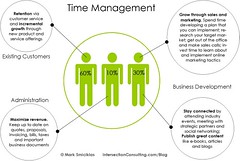
Time Management
Time Management (Photo credit: Intersection Consulting)
Finally, a great way to determine which tasks are not in your top 20 percent is to keep a running list of low-value tasks. ... For example, you can’t do work yourself that you could hire someone to do for $10 an hour. As you go through your days, write down all tasks you perform that fall into this category.
The next step in the process is to delegate the lowest value uses to others.
Five Steps to Effectively Delegate
It is often hard at first for some entrepreneurs and business owners to delegate because they want to control everything themselves. However, to achieve your end vision, you must delegate. ...
The fact is this: Delegating tasks to others can save you a great deal of time and allow you to focus that time on the highest value-added tasks. However, when done incorrectly, delegating results in things not getting done or getting done poorly, which is when you end up expending more time and energy than you have.
This is why it’s critical to delegate properly. Using the following steps will help you do so.
1. Identify the Right Person for Delegation
...The right person is the one who has the requisite skill set to do the task and the ability to complete the project within the appropriate timeline.
Your employees should maintain daily and weekly to-do lists. This way, you can review those lists to identify which employees have the ability to tackle the project to be delegated.
2. Clearly Define the Project
The next step is clearly to define the task, the deliverables, the completion date, and why the project needs to be done. ...
3. Discuss the Plan of Action or How the Task Can Be Accomplished
Next, you need to discuss the plan of action: Specifically, how the person charged with completing the task can accomplish it.
Of key importance here is that you don’t want to delegate a task (e.g., fax this report today), but rather a process (e.g., fax all the reports I have for now on). Therefore, even when delegating a seemingly simple task such as sending faxes, you need to discuss the plan. For example, how often do you need reports faxed? How quickly must they be faxed once you create them? What must be done after sending the fax? (Confirm receipt? Shred document?) ...
4. Have Them Repeat Back the Plan
Next, have the person to whom you delegate repeat the task and deliverables back to you to ensure their complete comprehension. ... Have the person repeat all of your directions back to you until the directions are right.
5. Monitor Progress and Provide Feedback (Longer-Term Tasks)
When you delegate a task that will take more than one or two days, you need to monitor its progress and provide feedback. Ideally, you identified project milestones or checkpoints to ensure the project stays on track when initially discussing the plan.
To ensure projects are completed properly, mark those milestones on your calendar and monitor that results are delivered on time. If they are not, be sure to immediately alert the worker that he or she has fallen behind. Meet with the worker periodically to provide feedback and guidance.
6. Evaluate Performance
The final step to effective delegation is to evaluate performance. ... Here’s why: If somebody does a B1 job the first time they perform a task that you delegate, ... the next time they will do a B1 or lower job because they think that their B1 job is good enough. This is why providing feedback and evaluating performance allows you to get the best results from those to whom you delegate.
English: Pareto / 1/2 Edgeworth-Box
English: Pareto / 1/2 Edgeworth-Box (Photo credit: Wikipedia)
Even if they did a great job, you need to explain why they did a great job so that they know how to repeat this performance in the future. You need to explain if there was room for improvement. People generally appreciate slightly negative feedback versus no feedback at all. ...
Finally, you need to understand and accept that it will often take at least twice as long to delegate a repeating task the first time as it would to do it yourself. However, once you delegate something successfully, it will be off your plate forever.
You must also accept that many delegated tasks may not get done as well as if you did them yourself. Although this isn’t acceptable for some areas of your business (e.g., providing a service to a customer), for others (e.g., reordering supplies, completing paperwork), good enough is good enough.
Effective delegation makes you replaceable, ... this is what you want. It allows you to spend time growing--rather than simply maintaining--your business. You can spend less time working and take real vacations. It also makes your business attractive to buyers, which is particularly important if your end vision is to sell your company.
Related: 
Find more ways to increase your productivity by subscribing to the Fast Company newsletter.
Excerpted with permission of the publisher, Wiley, from Start at the End: How Companies Can Grow Bigger and Faster by Reversing Their Business Plan by David Lavinsky. Copyright 2012 by David Lavinsky. This book is available at all bookstores and online booksellers.
Author Dave Lavinsky is the cofounder of Growthink, a consultancy that helps entrepreneurs and business owners identify and pursue new opportunities, develop new business plans, raise capital, and build growth strategies.

Enhanced by Zemanta

Wednesday, November 14, 2012

10 hidden taxes you didn't know you're paying

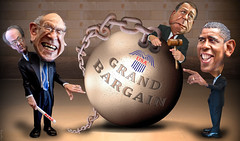
We need to get this to the Fiscal Cliff! What ...
We need to get this to the Fiscal Cliff! What could go wrong? (Photo credit: DonkeyHotey)
By 
JILL SCHLESINGER / 
MONEYWATCH/ November 12, 2012, 11:06 AM

Taxes
Taxes (Photo credit: Tax Credits)
(MoneyWatch) The dreaded "fiscal cliff" could raise taxes for 80 to 90 percent of Americans, if no deal occurs before the end of the year. But with attention focused on the political wrangling in Washington, the American Institute of CPAs is out with 10 common taxes many Americans don't realize they are paying. To help individuals plan for these insidious taxes, the AICPA has also created the Total Tax Insights calculator."

1. Medicare tax: The amount withheld by your employer from your paycheck (often under the line item "FICA," which stands for Federal Insurance Contributions Act) helps cover the cost of running the Medicare program, the federal system of health insurance for people over the age of 65. Employers pay one half of the FICA tax and employees pay the other half. The employee contribution is 6.2 percent for Social Security and 1.45 percent for Medicare on wages up to $110,100. The temporary payroll tax cut for tax years 2011 and 2012 reduced the employee portion for Social Security by 2 percent.
USFederalSocialInsuranceTaxShareByIncomeLevel....
USFederalSocialInsuranceTaxShareByIncomeLevel.1979-2007 (Photo credit: Wikipedia)
2. Self-employment tax: A Social Security and Medicare tax for individuals who work for themselves. It is similar to the Social Security and Medicare taxes withheld from the pay of most wage earners. The self-employment tax consists of two parts: 12.4 percent for Social Security and 2.9 percent for Medicare (hospital insurance) on income up to $110,100. However, the temporary payroll tax cut for tax years 2011 and 2012 reduced self-employment tax by 2 percent. ...
USFederalTotalTaxShareByIncomeLevel.1979-2007
USFederalTotalTaxShareByIncomeLevel.1979-2007 (Photo credit: Wikipedia)
3. Alternative minimum tax (AMT): ... In essence, it is a flat tax with two brackets, 26 percent and 28 percent. The problem with AMT is that it now ensnares not only the wealthiest Americans, but 4 million to 5 million taxpayers with annual incomes between $200,000 and $1 million. Congress has yet to approve a new inflation "patch" that would allow millions to escape AMT (the last patch expired in December). If a new one is not enacted, the AMT will hit 31 million taxpayers this year, reaching deeply into the middle class.
Share of federal excise taxes paid by US house...
Share of federal excise taxes paid by US households reporting different income levels, 1979-2007 (Photo credit: Wikipedia)
The utility taxes that Americans pay can add up quickly, as do the so-called "sin taxes" on alcohol and tobacco products.
4. Electricity or natural gas tax: A tax collected by energy suppliers based on consumption during the billing period.
5. Cable tax: Tax imposed on cable television subscribers.
6. Landline phone tax: Federal and state tax associated with use of a fixed phone line.
7. Cellphone tax: Federal and state tax imposed on mobile telephone users.
8. Federal and state gasoline tax: A tax on every gallon of gasoline sold, which account for 11 percent of the cost of a gallon of gas, according to the Energy Information Administration. ...
9. Cigarette tax: The tax on cigarette use varies from state to state. New York City has the highest rate, ....
10. State alcohol tax: The tax imposed on the purchase of beer, wine and spirits varies state by state. The highest rate for spirits can be found in Washington and the highest for beer is Alaska. Wyoming has the lowest rate.
© 2012 CBS Interactive Inc.. All Rights Reserved.


Jill SchlesingerON TWITTER »
Jill Schlesinger, CFP®, is the Editor-at-Large for CBS MoneyWatch. She covers the economy, markets, investing or anything else with a dollar sign. Prior to the launch of MoneyWatch in 2009, Jill was the chief investment officer for an independent investment advisory firm. In her infancy, she was an options trader on the Commodities Exchange of New York.

'via Blog this'
Enhanced by Zemanta

Alternative Health Benefits: "Like Bringing Your Pet to Work"?

This is the second of two articles on the role of complementary and alternative medicine in health-benefits plans. The first covered what is likely the most extensive CAM program in Corporate America. This article presents viewpoints from others in the corporate, medical, and insurance communities.


Despite one manufacturer’s staunch insistence that its broad coverage of alternative medicine practices yields big benefits, skeptics abound.
CFO.com (http://s.tt/1r73j)
David McCann


Parker Hannifin
Parker Hannifin (Photo credit: Wikipedia)
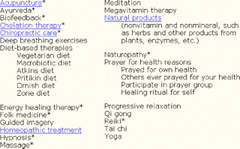
Big manufacturing company Parker Hannifin is adamant that its health-benefits plan, which covers an eye-popping assortment of complementary and alternative CAM techniques and therapies, is proving effective at keeping employees healthy and reducing health-care costs.

7-4. Complementary & Alternative Medicines
7-4. Complementary & Alternative Medicines (Photo credit: Peter Morville)
The company may well be unique in its breadth of CAM coverage. But cardiologist Ken Pelletier, a CAM advocate who helps companies design customized health and wellness initiatives, is nonetheless skeptical that Parker Hannifin, a Fortune 500 manufacturer, is on the right path.

Referring to the company's CAM coverage list ..., Pelletier says, “At least half if not three-quarters of these are in the ‘caveat emptor’ category. Many of them have no evidence base whatsoever. That doesn’t mean they won’t work for some individual with an unusual response to it. But that doesn’t mean they’re replicable.”

English: Logo of the U.S. Food and Drug Admini...
English: Logo of the U.S. Food and Drug Administration (2006) (Photo credit: Wikipedia)
From the list, only acupuncture, bio-identical hormone therapy, and chelation (for heavy-metal toxicity, not some of the other conditions it’s sometimes used for) are approved by the U.S. Food and Drug Administration. Practitioners don’t need FDA approval to provide the others because they are not even recognized as therapeutic interventions, says Pelletier. Only a few, like acupuncture, biofeedback, hypnotherapy (if prescribed by a psychologist or psychiatrist), and therapeutic massage, are covered by more than the rare health plan.

Did someone mention alternative medicine.
Did someone mention alternative medicine. (Photo credit: geofones)
Pelletier’s assessment is backed up by Helen Darling, president of the National Business Group on Health, which represents more than 350 large-employer members on national health-policy issues. “For most of these things, I’ve never heard of a company that covers them,” she says. “For the most part they are not medically necessary. They’re more like perks, like bringing your pet to work. [Parker Hannifin] is wasting its money unless it’s clear in its own mind that it’s getting better talent and retaining it by doing this.”

Not surprisingly, the health-insurance industry is also on the opposing side. “Typically what drives coverage is whether there is a scientific evidence base that tells us something is safe, effective, and in some cases more effective than an alternative,” says Susan Pisano, vice president of communications for America’s Health Insurance Plans, a major lobbying organization. “And then an employer has to be willing to fund it.”

There are perhaps only 15 to 25 large companies that could be described as active on the CAM front, says Raymond Fabius, chief medical officer for Truven Health Analytics. The company, which counts about 200 of theFortune 500 as clients, organizes companies’ health data from disparate sources (health care, pharmacy, lab, and disability claims, as well as health-risk appraisals, worker’s compensation, etc.) into a single repository enabling detailed analyses.

Many employers, ... spend most of their time focused on benefit design, Fabius says. Another group is moving toward the position that containing those costs partly involves managing workers’ health. Then there is a small cadre that feels health costs are really not a cost but an investment in workforce productivity. “And it’s a subset of those that are engaged in broad-based efforts to elevate employees’ health and wellness, including CAM efforts,” he says.

But what, exactly, does “complementary and alternative” medicine mean? Definitions differ widely, from Parker Hannifin’s to those that refer mostly to behavioral therapies.

For example, Johnson and Johnson, long regarded as one of the most liberal companies on the CAM front, offers assorted tools addressing employees’ mental well-being. Employees can phone coaches who provide “mindfulness” treatments aimed at helping them relax and reenergize, says chief medical officer Fik Isaac. There are wellness professionals at many company locations who offer energy management, yoga, and other meditative approaches. 


J&J also covers acupuncture, Pilates, therapeutic massage, and the more controversial reiki, ... But when it comes to many of the items on Parker-Hannifin’s list, “they would be covered only if prescribed by health-care professionals as medical necessities,” Isaac notes. “What works, we apply. But broader coverage does not indicate better outcomes. Unless there is an evidence base, we wouldn’t provide coverage. And, from a scalability standpoint, the utilization of and yield from those services determine their cost-effectiveness.”

Fabius says he believes “strongly” that “bending the curve” on health-care costs — actually decreasing them rather than merely slowing their growth— requires a very comprehensive effort to create a culture of health. That may include acceptance of alternative therapies that help people with chronic or catastrophic illnesses, as well as other conditions.

“Things like meditation and even spiritual therapy can have a very significant [effect] on individuals and families,” Fabius says....

But many CAM practices are not covered "for good reason,” notes Fabius, who spent 10 years as a corporate medical director for Cigna, Aetna, and U.S. Healthcare. Not only is it important to prove the effectiveness of a treatment or therapy, there is also great pressure from companies to keep health-care premiums down, and “adding more things to the benefits package adds to the premium costs,” he said.

'via Blog this'
Enhanced by Zemanta